



Engineering Changes
Reliably manage and seamlessly track technical changes
Uncontrolled change processes lead to costs and risks
Technical changes are part of daily business in product development. However, without clearly structured planning and workflows, serious problems arise in this critical phase of the product lifecycle: Engineering, procurement, and manufacturing work with different versions. Information reaches stakeholders too late or not at all, manual approvals delay decisions, and responsibilities remain unclear. At the same time, a lack of traceability and undocumented processes complicate audits and make it difficult to prove compliance. The consequences include production errors, scrap, longer development times, rising costs, and avoidable quality risks.
Your benefits
- Digitally manage change processes from start to finish
- Avoid version chaos and media breaks
- Carry out approvals in a secure and traceable manner
- Coordinate collaboration across departments
- Ensure audit readiness and compliance
- Implement changes faster and in a controlled manner

Orchestrate engineering changes holistically
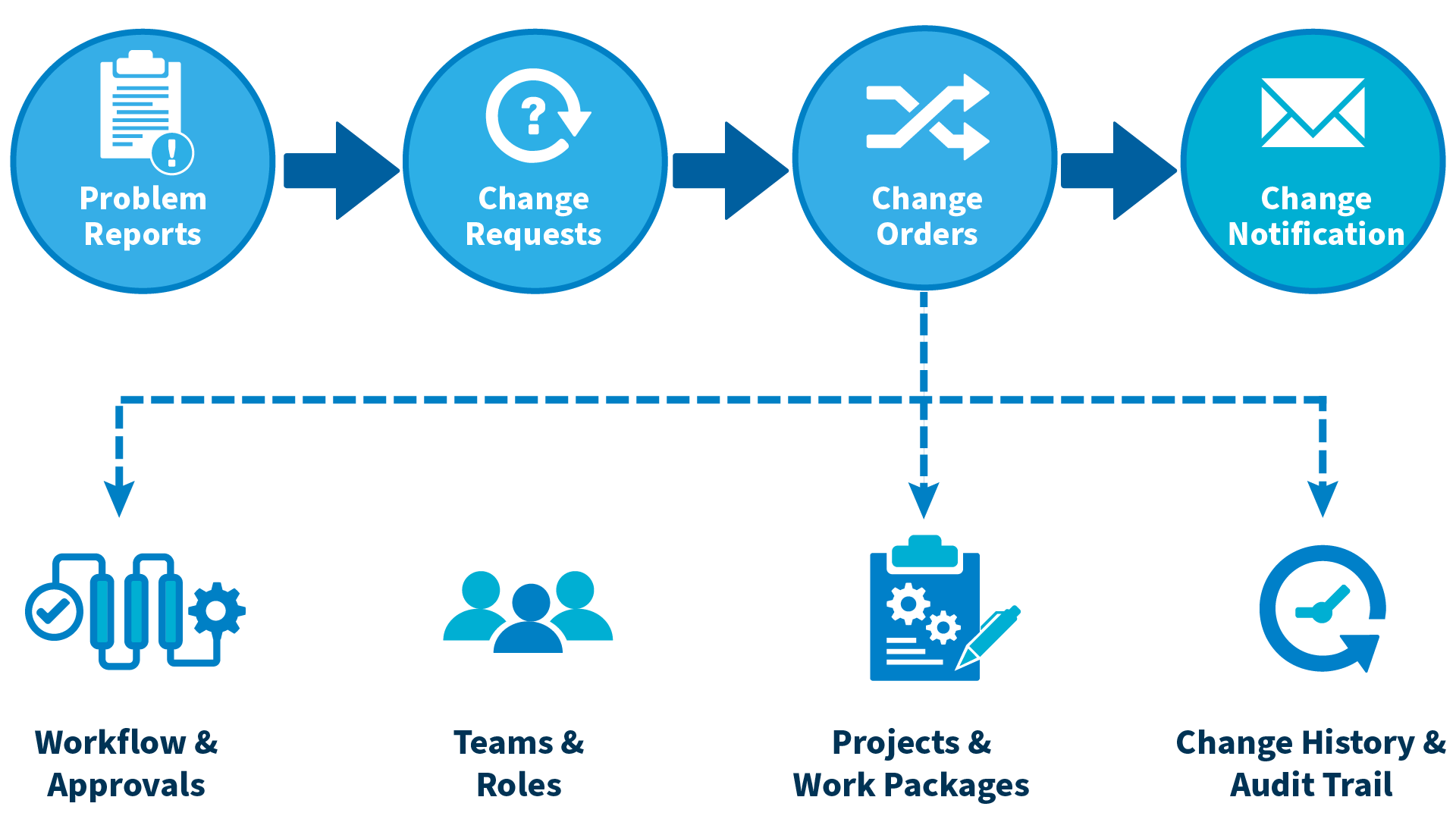
CONTACT Elements covers the entire engineering change process – from problem reports to change requests and change orders, all the way to change notifications. Changes are carried out within projects and managed via workflows. Assigning individuals to roles and teams establishes clear responsibilities. Automated approvals, project integration, and a complete change history ensure that technical changes can be planned efficiently, implemented safely, and traced at any time.
Orchestrate engineering changes holistically
CONTACT Elements covers the entire engineering change process – from problem reports to change requests and change orders, all the way to change notifications. Changes are carried out within projects and managed via workflows. Assigning individuals to roles and teams establishes clear responsibilities. Automated approvals, project integration, and a complete change history ensure that technical changes can be planned efficiently, implemented safely, and traced at any time.
CONTACT Elements covers the entire engineering change process – from problem reports to change requests and change orders, all the way to change notifications. Changes are carried out within projects and managed via workflows. Assigning individuals to roles and teams establishes clear responsibilities. Automated approvals, project integration, and a complete change history ensure that technical changes can be planned efficiently, implemented safely, and traced at any time.
Reliably capture and approve changes
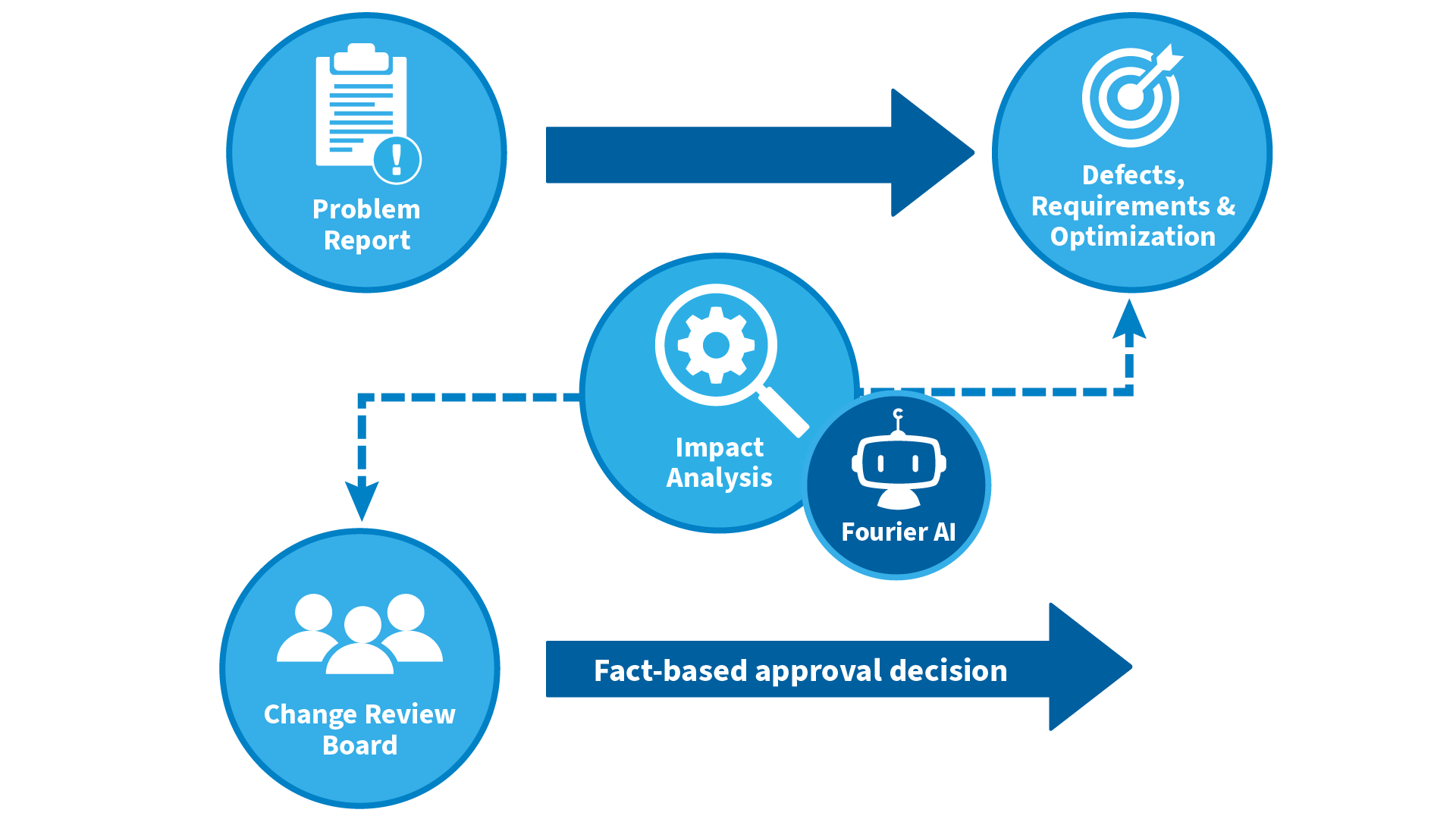
A technical change typically begins with a problem report. It documents quality defects, customer requirements, or optimization potential in a structured way. Impact analyses help identify affected objects, such as parts and documents, at an early stage and define the scope of the change. Where-used lists or the Link Graph enable you to quickly understand how other objects may be affected. Fourier AI supports users through natural language chat. This enables the Change Review Board to make well-informed approval decisions and transfer the changes into a controlled implementation process.
Reliably capture and approve changes
A technical change typically begins with a problem report. It documents quality defects, customer requirements, or optimization potential in a structured way. Impact analyses help identify affected objects, such as parts and documents, at an early stage and define the scope of the change. Where-used lists or the Link Graph enable you to quickly understand how other objects may be affected. Fourier AI supports users through natural language chat. This enables the Change Review Board to make well-informed approval decisions and transfer the changes into a controlled implementation process.
A technical change typically begins with a problem report. It documents quality defects, customer requirements, or optimization potential in a structured way. Impact analyses help identify affected objects, such as parts and documents, at an early stage and define the scope of the change. Where-used lists or the Link Graph enable you to quickly understand how other objects may be affected. Fourier AI supports users through natural language chat. This enables the Change Review Board to make well-informed approval decisions and transfer the changes into a controlled implementation process.
Coordinate change implementation with projects and teams

Technical changes are often part of larger development projects. In CONTACT Elements, changes can be managed directly within the project context, enabling coordinated scheduling, resource planning, effort tracking, and task management for changes. Workflows can be defined for approvals, releases, and other processes. Team members automatically receive assigned tasks in their personal Task Manager. Assigning individuals to roles and teams establishes clear responsibilities, ensuring efficient execution.
Coordinate change implementation with projects and teams
Technical changes are often part of larger development projects. In CONTACT Elements, changes can be managed directly within the project context, enabling coordinated scheduling, resource planning, effort tracking, and task management for changes. Workflows can be defined for approvals, releases, and other processes. Team members automatically receive assigned tasks in their personal Task Manager. Assigning individuals to roles and teams establishes clear responsibilities, ensuring efficient execution.

Technical changes are often part of larger development projects. In CONTACT Elements, changes can be managed directly within the project context, enabling coordinated scheduling, resource planning, effort tracking, and task management for changes. Workflows can be defined for approvals, releases, and other processes. Team members automatically receive assigned tasks in their personal Task Manager. Assigning individuals to roles and teams establishes clear responsibilities, ensuring efficient execution.
Implement and roll out changes in a controlled manner
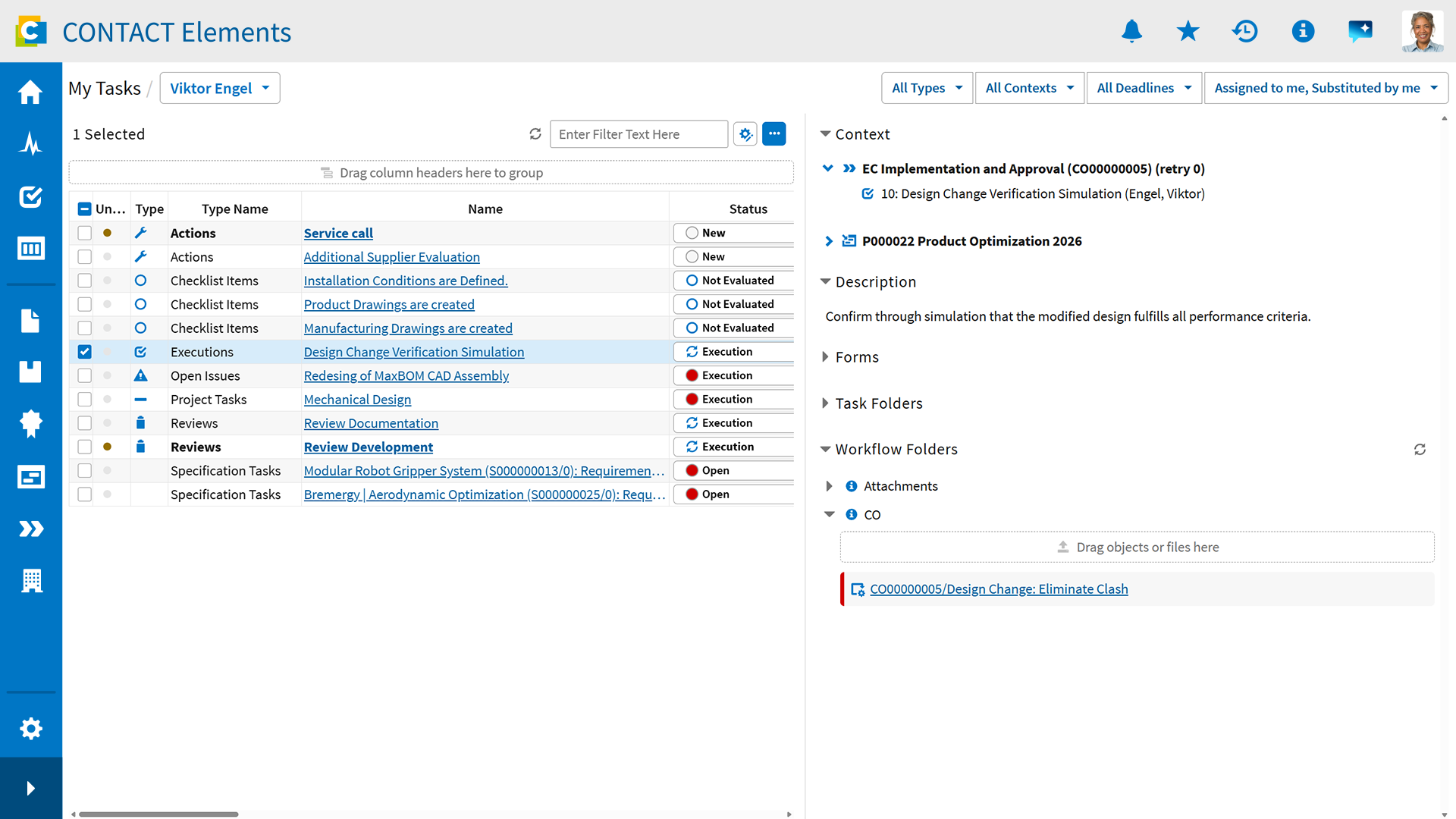
Implementation, review, and approval are managed using tasks and workflows. Once approval is granted, relevant stakeholders are automatically notified and approved data is passed on to downstream systems. This ensures that changes reliably and consistently reach manufacturing, procurement, and other business areas. The PLM system thus serves as the leading data foundation that downstream processes are aligned with.
Implement and roll out changes in a controlled manner
Implementation, review, and approval are managed using tasks and workflows. Once approval is granted, relevant stakeholders are automatically notified and approved data is passed on to downstream systems. This ensures that changes reliably and consistently reach manufacturing, procurement, and other business areas. The PLM system thus serves as the leading data foundation that downstream processes are aligned with.
Implementation, review, and approval are managed using tasks and workflows. Once approval is granted, relevant stakeholders are automatically notified and approved data is passed on to downstream systems. This ensures that changes reliably and consistently reach manufacturing, procurement, and other business areas. The PLM system thus serves as the leading data foundation that downstream processes are aligned with.
Ensure long-term compliance and governance
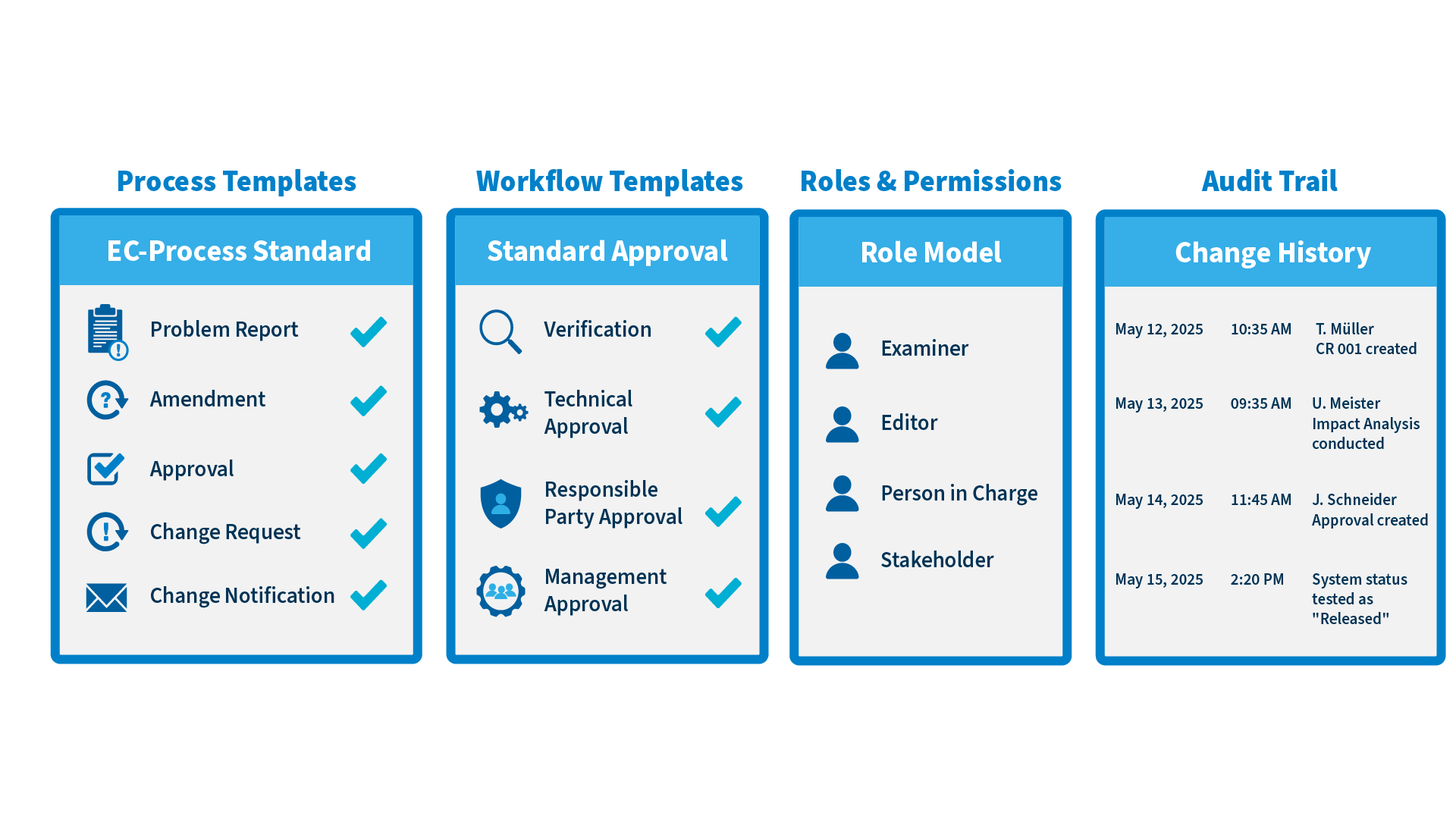
Standardized process templates, workflow templates, as well as role and permission concepts ensure consistent change management across all products and projects. The integrated change history transparently documents at any time which changes were made, who initiated or approved them, and in which context they arose. This sustainably supports audit readiness, regulatory compliance, and the continuous improvement of change processes.
Ensure long-term compliance and governance
Standardized process templates, workflow templates, as well as role and permission concepts ensure consistent change management across all products and projects. The integrated change history transparently documents at any time which changes were made, who initiated or approved them, and in which context they arose. This sustainably supports audit readiness, regulatory compliance, and the continuous improvement of change processes.
Standardized process templates, workflow templates, as well as role and permission concepts ensure consistent change management across all products and projects. The integrated change history transparently documents at any time which changes were made, who initiated or approved them, and in which context they arose. This sustainably supports audit readiness, regulatory compliance, and the continuous improvement of change processes.
Further information
Would you like to find out more about this topic? Choose one of the following information offers.

