



Project Deliverables
Firmly link project deliverables to execution
When completed tasks do not mean complete deliverables
In complex development projects, simply marking tasks as complete is not enough. Documents, drawings, approvals, and other agreed deliverables must be fully available and assigned to the correct work package or milestone. If this connection is missing, gaps emerge between project planning and actual outcomes, making project status hard to track and required work results easy to overlook. Therefore, it is crucial to consistently align project progress with the deliverables actually produced.
Your benefits
- Link project tasks directly to concrete deliverables and product data
- Define required deliverables from the outset
- Ensure consistency in recurring projects with standardized deliverables and templates
- Always provide the correct template version for project results
- Complete tasks only when all defined deliverables have been fully provided

Provide concrete work results in the project context
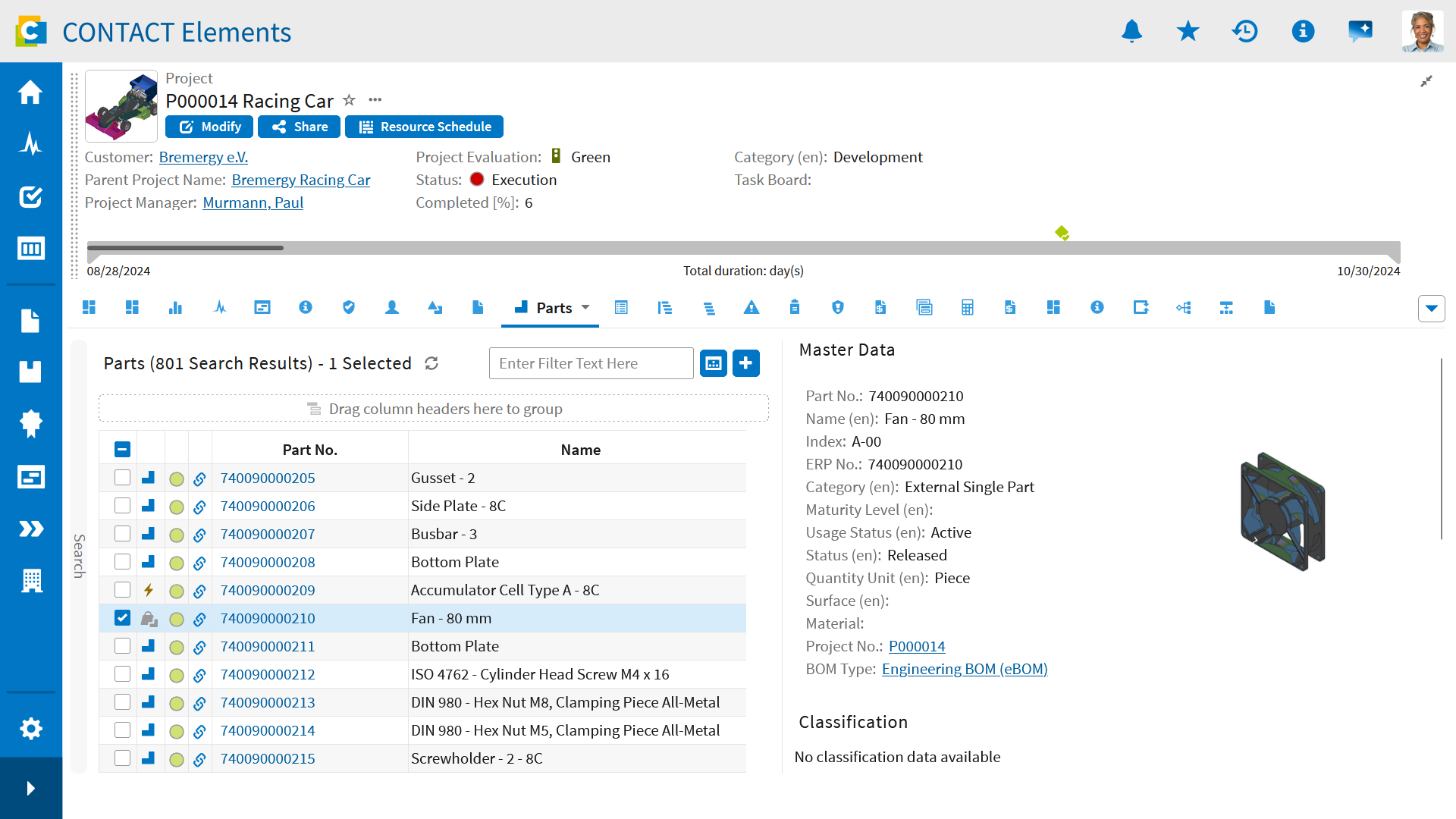
Seamlessly connect project management with concrete work results. Documents, parts, 3D models, engineering drawings, simulations, or concept designs are thus directly available within the context of the respective project task. Along with their work assignment, team members gain direct access to the product information and documents relevant to their work. They integrate the finished deliverables directly into the project structure. This creates an end-to-end connection between project processes and product data, ensuring project deliverables remain available wherever they are needed for downstream work.
Provide concrete work results in the project context
Seamlessly connect project management with concrete work results. Documents, parts, 3D models, engineering drawings, simulations, or concept designs are thus directly available within the context of the respective project task. Along with their work assignment, team members gain direct access to the product information and documents relevant to their work. They integrate the finished deliverables directly into the project structure. This creates an end-to-end connection between project processes and product data, ensuring project deliverables remain available wherever they are needed for downstream work.
Seamlessly connect project management with concrete work results. Documents, parts, 3D models, engineering drawings, simulations, or concept designs are thus directly available within the context of the respective project task. Along with their work assignment, team members gain direct access to the product information and documents relevant to their work. They integrate the finished deliverables directly into the project structure. This creates an end-to-end connection between project processes and product data, ensuring project deliverables remain available wherever they are needed for downstream work.
Define mandatory deliverables for projects
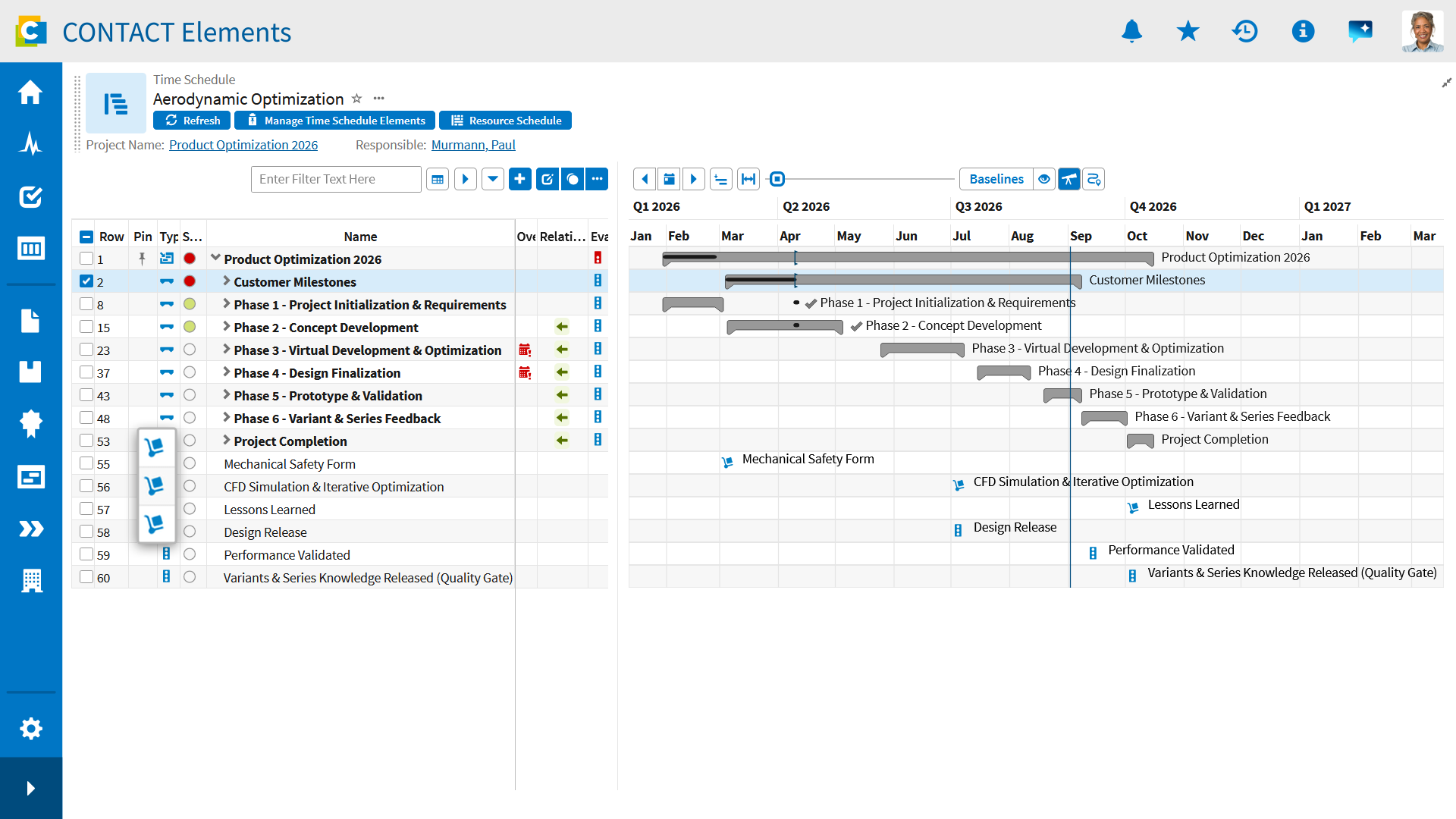
Determine which deliverables must be created over the course of the project right from the planning stage. Standardized project templates allow you to firmly anchor checklists, deliverables, and documents into recurring project structures. This integrates expected outcomes into project planning from the very start. All stakeholders benefit from these linked work items:
Project teams receive clear specifications on which results are expected in each project phase and have a solid foundation for execution across the entire project context. This lays the groundwork for smooth workflows and ensures deliverables are achieved with precision.
Define mandatory deliverables for projects
Determine which deliverables must be created over the course of the project right from the planning stage. Standardized project templates allow you to firmly anchor checklists, deliverables, and documents into recurring project structures. This integrates expected outcomes into project planning from the very start. All stakeholders benefit from these linked work items:
Project teams receive clear specifications on which results are expected in each project phase and have a solid foundation for execution across the entire project context. This lays the groundwork for smooth workflows and ensures deliverables are achieved with precision.
Determine which deliverables must be created over the course of the project right from the planning stage. Standardized project templates allow you to firmly anchor checklists, deliverables, and documents into recurring project structures. This integrates expected outcomes into project planning from the very start. All stakeholders benefit from these linked work items:
Project teams receive clear specifications on which results are expected in each project phase and have a solid foundation for execution across the entire project context. This lays the groundwork for smooth workflows and ensures deliverables are achieved with precision.
Define required work results using templates
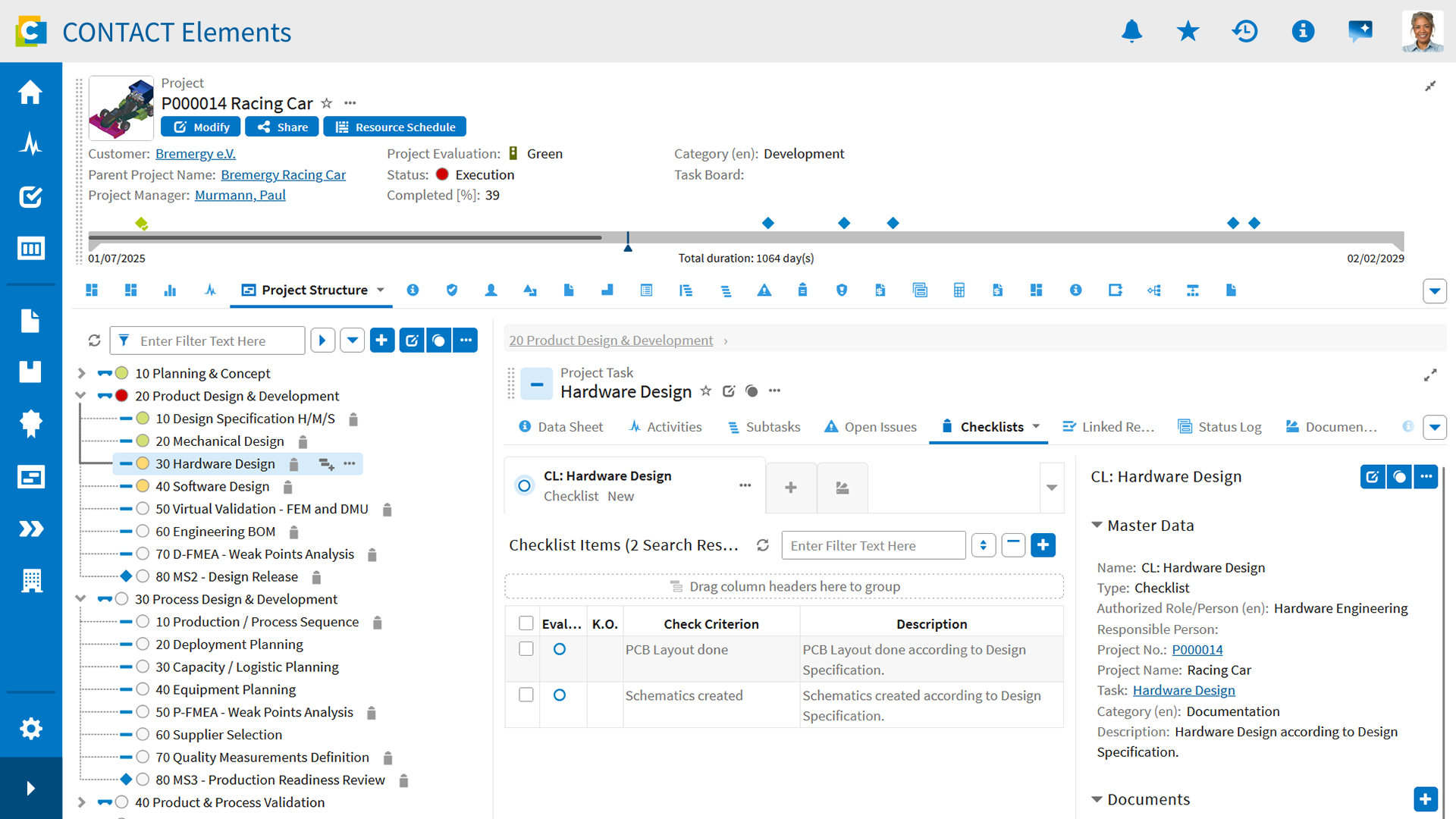
Specify for each task which document template serves as the basis for the expected work result. As soon as the task is being worked on, the system automatically creates the document from this template. You can define whether a specific index or always the latest approved version of the template is used. This ensures project teams always work with the correct template version without any manual searching.
Define required work results using templates
Specify for each task which document template serves as the basis for the expected work result. As soon as the task is being worked on, the system automatically creates the document from this template. You can define whether a specific index or always the latest approved version of the template is used. This ensures project teams always work with the correct template version without any manual searching.
Specify for each task which document template serves as the basis for the expected work result. As soon as the task is being worked on, the system automatically creates the document from this template. You can define whether a specific index or always the latest approved version of the template is used. This ensures project teams always work with the correct template version without any manual searching.
Only complete tasks with complete deliverables
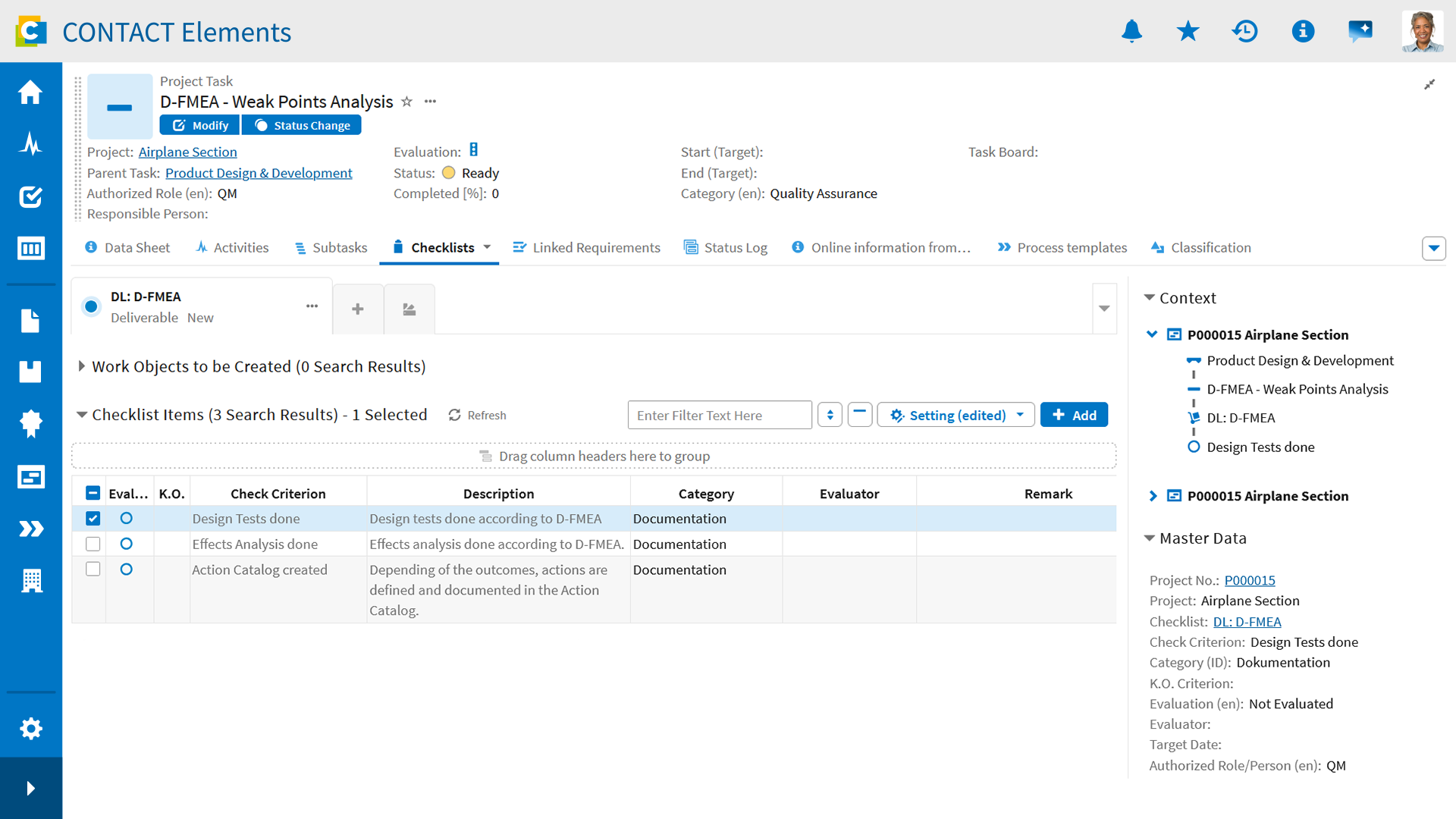
Defined deliverables ensure that actual project progress is binding: team members can only close a task once the designated deliverables have been provided. A formal completion notice is therefore not enough as long as required documents, drawings, or approvals are still missing. This keeps project status and actual results consistently tied together. It increases process reliability and ensures that agreed work results are fully delivered before the corresponding task is marked as complete.
Only complete tasks with complete deliverables
Defined deliverables ensure that actual project progress is binding: team members can only close a task once the designated deliverables have been provided. A formal completion notice is therefore not enough as long as required documents, drawings, or approvals are still missing. This keeps project status and actual results consistently tied together. It increases process reliability and ensures that agreed work results are fully delivered before the corresponding task is marked as complete.
Defined deliverables ensure that actual project progress is binding: team members can only close a task once the designated deliverables have been provided. A formal completion notice is therefore not enough as long as required documents, drawings, or approvals are still missing. This keeps project status and actual results consistently tied together. It increases process reliability and ensures that agreed work results are fully delivered before the corresponding task is marked as complete.


