



Issues & Actions
Structurally manage open issues and actions instead of overloading project plans
Managing detailed tasks and keeping project plans lean
Projects constantly generate open issues, inquiries, and minor actions that must be addressed, but should not be maintained at the schedule or work-package level. If these detailed tasks are managed within the project plan anyway, it bloats the work breakdown structure and the schedule. Clarity is lost, while complexity and maintenance efforts increase. Conversely, if they are handled without a structured process, they lack transparency, clear responsibilities, reliable tracking, and context.
Your benefits
- Keep project plans clear and stable at the work package level
- Transparently capture, prioritize, and track open issues
- Manage actions effectively with clear responsibilities and deadlines
- Reduce administrative detail work in project management
- Coordinate teamwork based on shared, up-to-date information

Keep project plans at the right level of detail

Deliberately shift detailed operational work to a level below the work packages. This keeps your work breakdown structure clear and reduces the frequency of changes. The project structure defines the process down to the work package level using milestones, phases, and product components. Operational details, such as individual actions and open issues, require minimal administrative effort at the Issues & Actions level. Thanks to this balanced level of detail, project management can focus on steering and tracking goals instead of detailed administrative upkeep.
Keep project plans at the right level of detail
Deliberately shift detailed operational work to a level below the work packages. This keeps your work breakdown structure clear and reduces the frequency of changes. The project structure defines the process down to the work package level using milestones, phases, and product components. Operational details, such as individual actions and open issues, require minimal administrative effort at the Issues & Actions level. Thanks to this balanced level of detail, project management can focus on steering and tracking goals instead of detailed administrative upkeep.

Deliberately shift detailed operational work to a level below the work packages. This keeps your work breakdown structure clear and reduces the frequency of changes. The project structure defines the process down to the work package level using milestones, phases, and product components. Operational details, such as individual actions and open issues, require minimal administrative effort at the Issues & Actions level. Thanks to this balanced level of detail, project management can focus on steering and tracking goals instead of detailed administrative upkeep.
Transparently track open issues within the project team
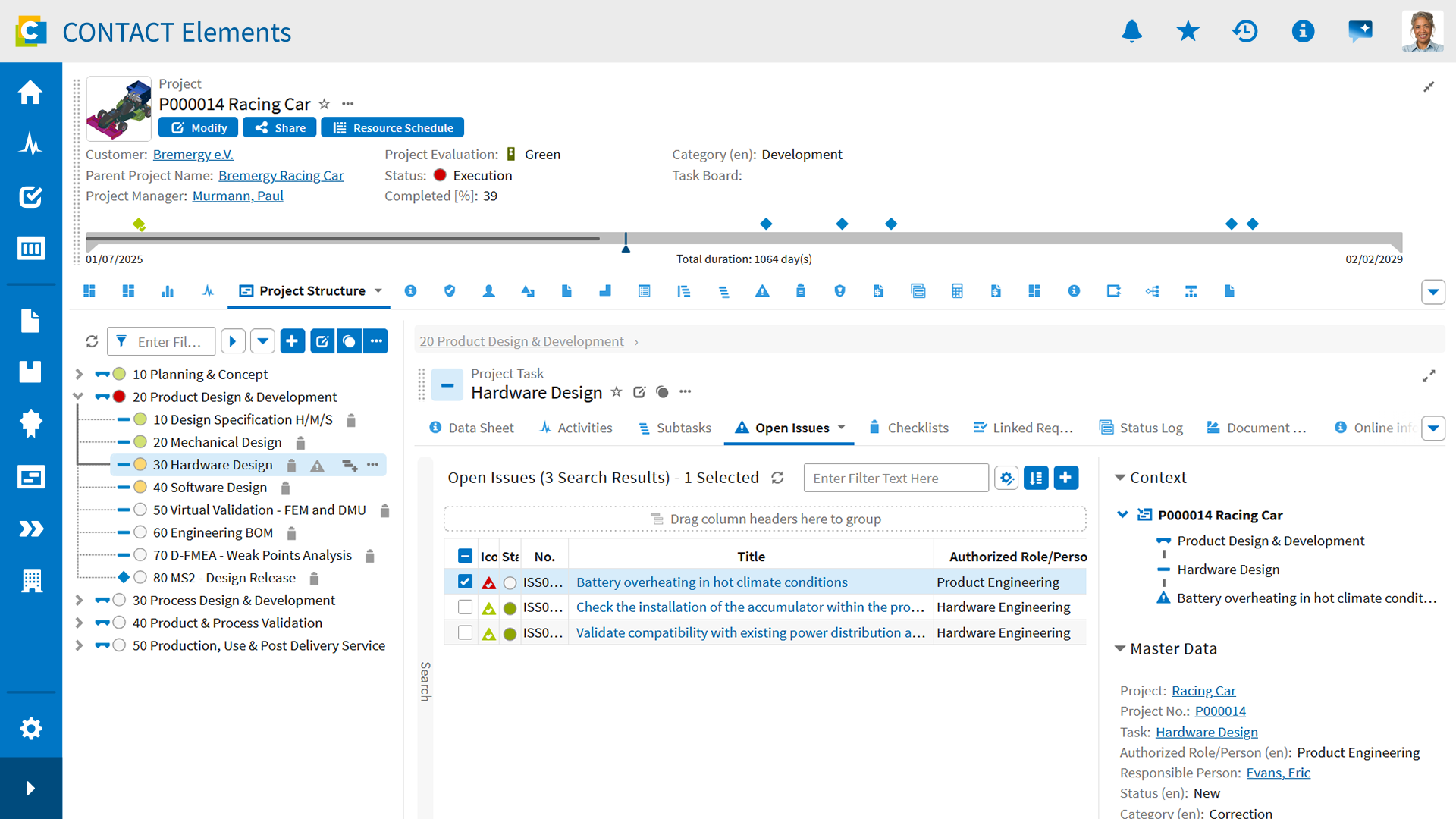
Capture technical questions, coordination needs, ambiguities, and tasks below the work package level as open issues, and track their progress without linking them directly to the actual project plan. Instead, simply assign them to a work package so you do not have to follow a rigid schedule. Priorities, responsibilities, and deadlines always remain transparent, while the project structure stays clear and stable at the work package level.
Transparently track open issues within the project team
Capture technical questions, coordination needs, ambiguities, and tasks below the work package level as open issues, and track their progress without linking them directly to the actual project plan. Instead, simply assign them to a work package so you do not have to follow a rigid schedule. Priorities, responsibilities, and deadlines always remain transparent, while the project structure stays clear and stable at the work package level.
Capture technical questions, coordination needs, ambiguities, and tasks below the work package level as open issues, and track their progress without linking them directly to the actual project plan. Instead, simply assign them to a work package so you do not have to follow a rigid schedule. Priorities, responsibilities, and deadlines always remain transparent, while the project structure stays clear and stable at the work package level.
Coordinate actions in a targeted manner
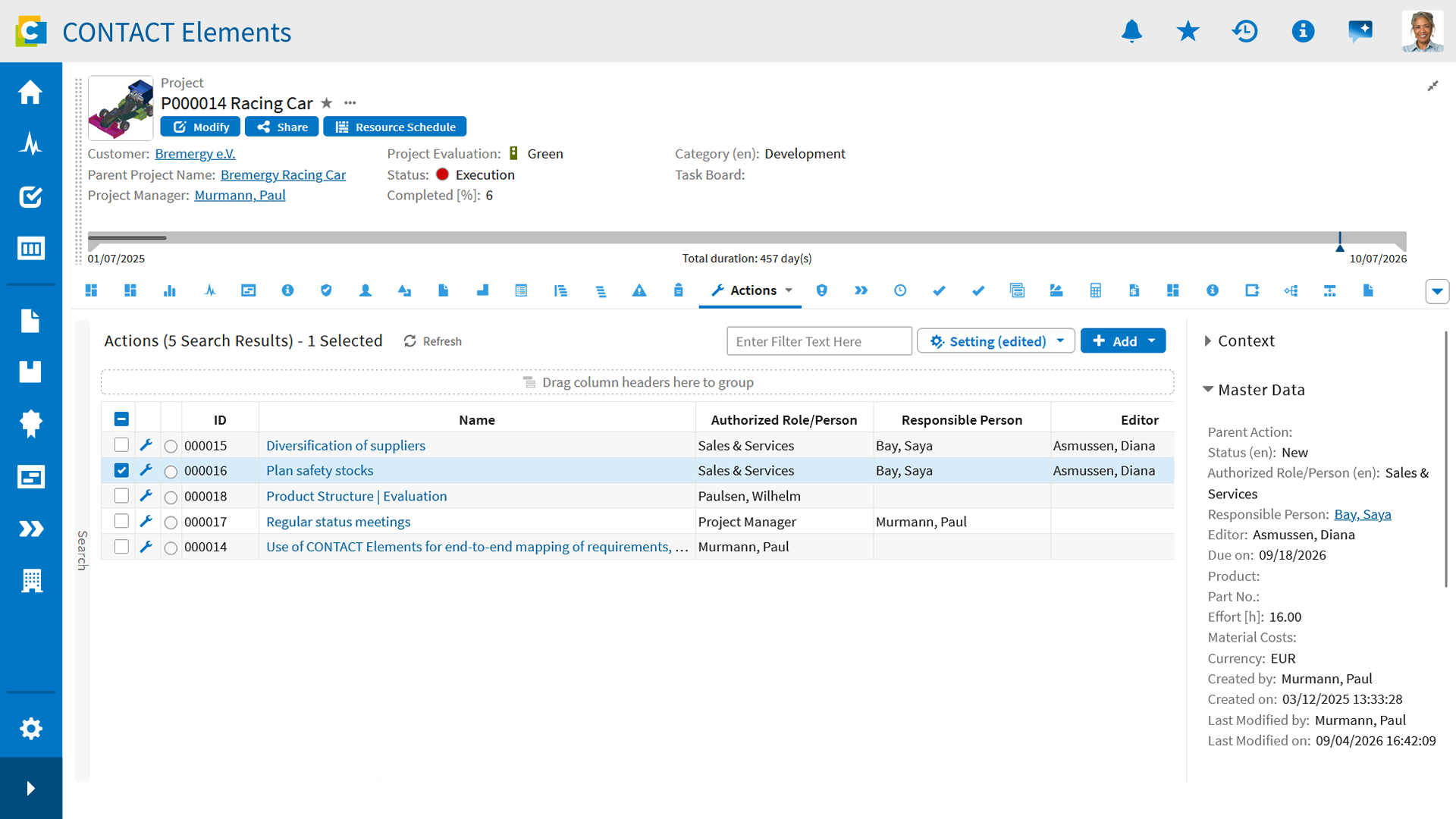
Derive concrete actions from identified problems and systematically track their implementation through to completion. The project team can see at any time which actions are open, who is responsible, and which deadlines must be met. This keeps even a large number of detailed activities manageable.
Coordinate actions in a targeted manner
Derive concrete actions from identified problems and systematically track their implementation through to completion. The project team can see at any time which actions are open, who is responsible, and which deadlines must be met. This keeps even a large number of detailed activities manageable.
Derive concrete actions from identified problems and systematically track their implementation through to completion. The project team can see at any time which actions are open, who is responsible, and which deadlines must be met. This keeps even a large number of detailed activities manageable.
Efficiently organize teamwork
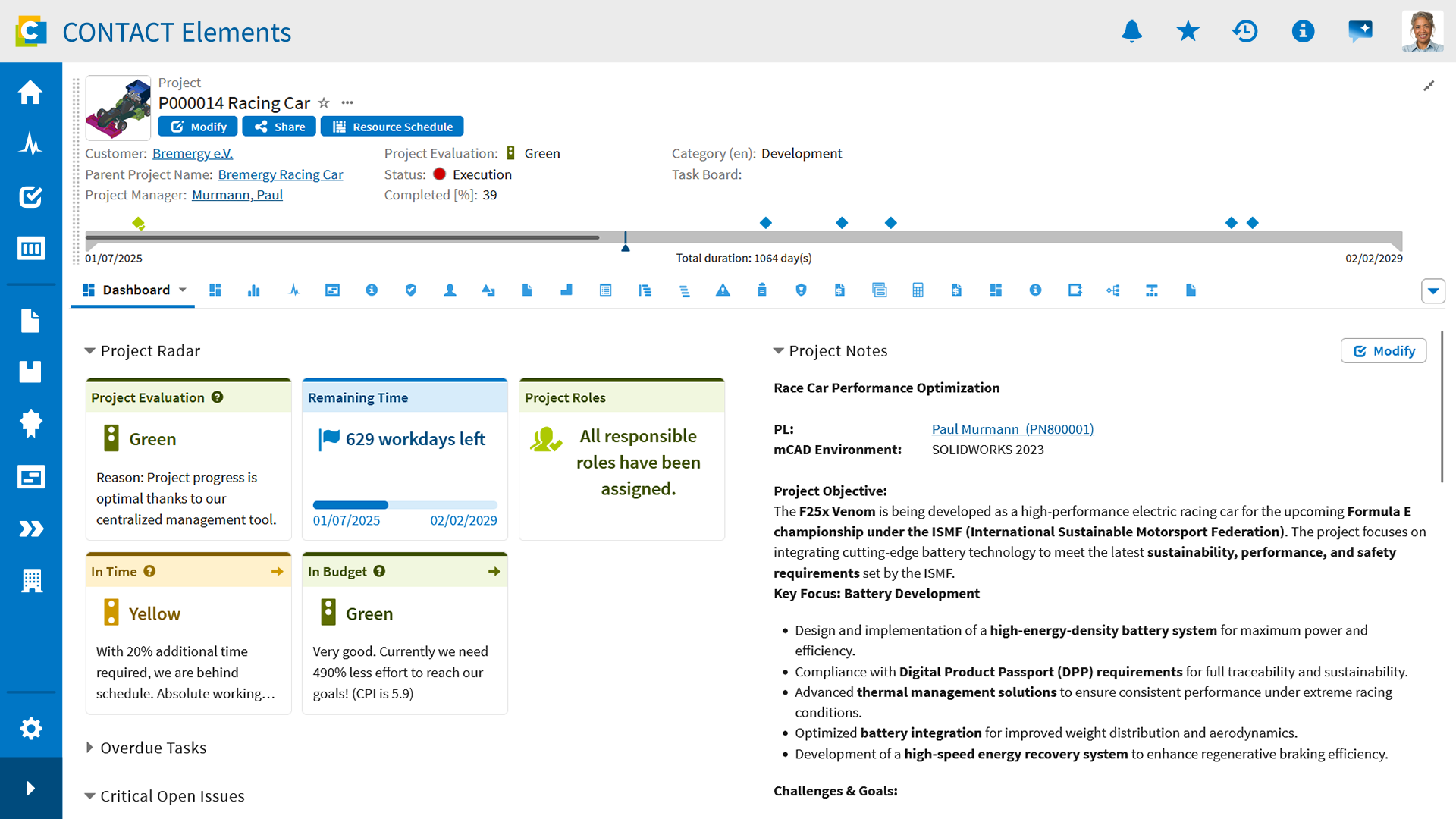
Use regular meetings to review the list of open issues, adjust priorities, clarify responsibilities, and jointly manage actions. This is more efficient, simpler, and more effective than mapping these details within the operational task management schedule. All participants work with the same up-to-date database and can immediately see the status of critical topics.
Efficiently organize teamwork
Use regular meetings to review the list of open issues, adjust priorities, clarify responsibilities, and jointly manage actions. This is more efficient, simpler, and more effective than mapping these details within the operational task management schedule. All participants work with the same up-to-date database and can immediately see the status of critical topics.
Use regular meetings to review the list of open issues, adjust priorities, clarify responsibilities, and jointly manage actions. This is more efficient, simpler, and more effective than mapping these details within the operational task management schedule. All participants work with the same up-to-date database and can immediately see the status of critical topics.


