


API & Integration
Connect systems with open standards and eliminate silos
Data silos prevent end-to-end processes
In engineering and production, hardly any system operates in isolation: PLM, ERP, CRM, ALM, and IoT services each hold only part of the truth. When these systems do not communicate, data silos, duplicate data maintenance, and coordination loops arise. The Catalyst Integration Platform seamlessly connects these systems. Modern REST APIs and open standards such as OSLC make it possible to connect virtually any system. Certified interfaces to leading systems such as SAP S/4HANA eliminate data silos and enable end-to-end processes along the digital thread. Because integration is based on open standards, you remain free to make your own technology choices—today and when you switch systems in the future.
Your benefits
- Connect PLM, ERP, CRM, ALM, and IoT services
- Eliminate data silos and enable end-to-end processes along the digital thread
- Use open standards such as OSLC, STEP, and ReqIF instead of proprietary interfaces
- Leverage certified interfaces to leading systems such as SAP S/4HANA
- Extend and operate integrations yourself

End-to-end data along the digital thread

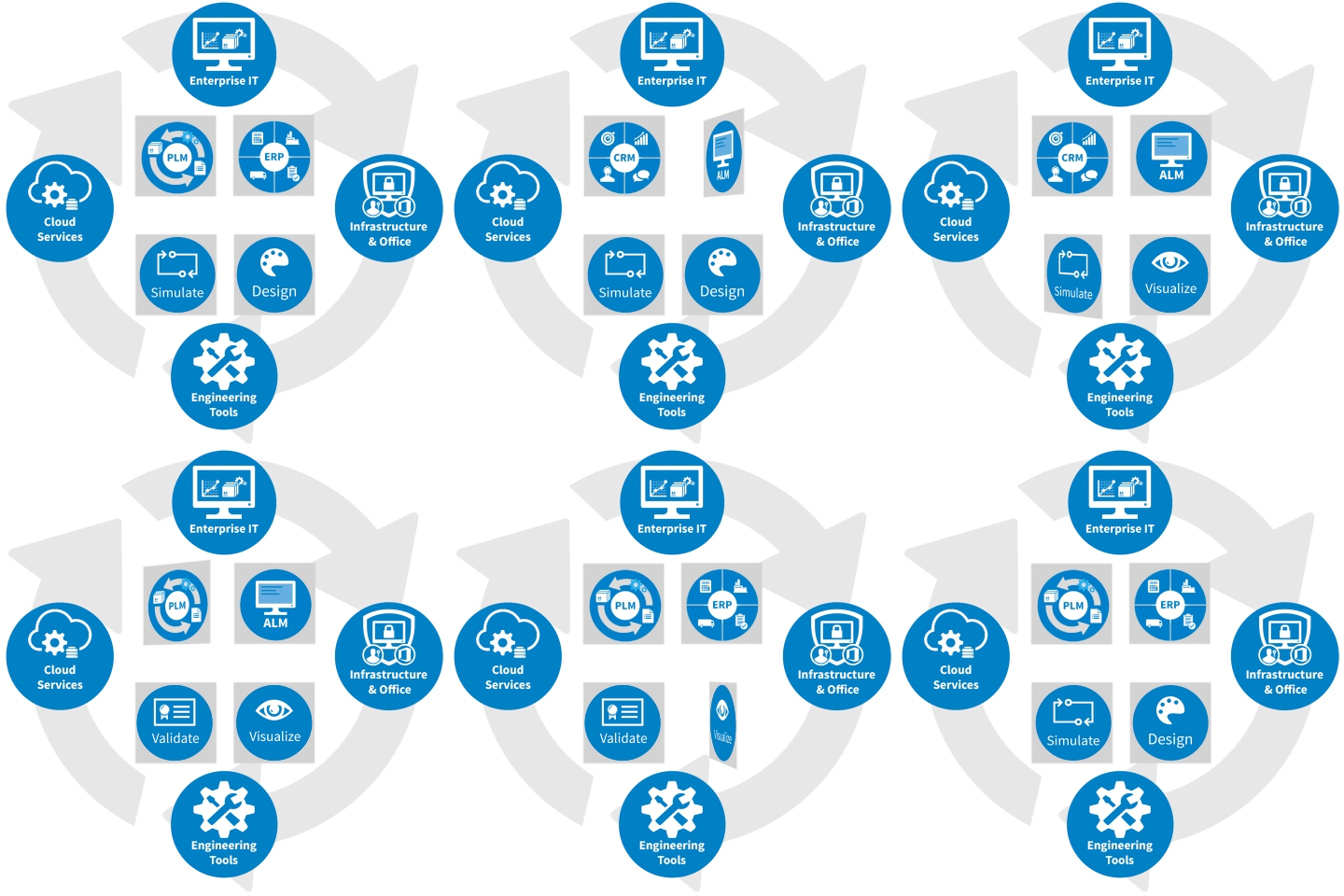
A change request in PLM, the bill of materials in ERP, a requirement in ALM, operational data from the field: Only when this information comes together does a continuous digital thread emerge. The Catalyst Integration Platform distributes data automatically and based on rules between the systems involved, rather than moving it through Excel spreadsheets or relying on manual re-entry. Each piece of information has a system of record and is available wherever it is needed—traceable, up to date, and without duplicate data maintenance.
End-to-end data along the digital thread
A change request in PLM, the bill of materials in ERP, a requirement in ALM, operational data from the field: Only when this information comes together does a continuous digital thread emerge. The Catalyst Integration Platform distributes data automatically and based on rules between the systems involved, rather than moving it through Excel spreadsheets or relying on manual re-entry. Each piece of information has a system of record and is available wherever it is needed—traceable, up to date, and without duplicate data maintenance.

A change request in PLM, the bill of materials in ERP, a requirement in ALM, operational data from the field: Only when this information comes together does a continuous digital thread emerge. The Catalyst Integration Platform distributes data automatically and based on rules between the systems involved, rather than moving it through Excel spreadsheets or relying on manual re-entry. Each piece of information has a system of record and is available wherever it is needed—traceable, up to date, and without duplicate data maintenance.
APIs for virtually any integration
All CONTACT Elements functions and objects are available through documented REST APIs based on HTTP and JSON. This lets you connect your own applications, portals, analytics tools, or automations without relying on proprietary connectors.
APIs for virtually any integration
All CONTACT Elements functions and objects are available through documented REST APIs based on HTTP and JSON. This lets you connect your own applications, portals, analytics tools, or automations without relying on proprietary connectors.
All CONTACT Elements functions and objects are available through documented REST APIs based on HTTP and JSON. This lets you connect your own applications, portals, analytics tools, or automations without relying on proprietary connectors.
Open standards instead of proprietary interfaces
Using open interfaces prevents your data and processes from becoming tied to a single vendor or proprietary data format. CONTACT Elements consistently relies on OSLC, STEP, ReqIF, and XML—documented, widely adopted interfaces designed for long-term availability. If a connected system changes, you replace the endpoint instead of rebuilding the integration. Knowledge of your data flows remains in-house, giving you the freedom to continue evolving your system landscape.
Open standards instead of proprietary interfaces
Using open interfaces prevents your data and processes from becoming tied to a single vendor or proprietary data format. CONTACT Elements consistently relies on OSLC, STEP, ReqIF, and XML—documented, widely adopted interfaces designed for long-term availability. If a connected system changes, you replace the endpoint instead of rebuilding the integration. Knowledge of your data flows remains in-house, giving you the freedom to continue evolving your system landscape.
Using open interfaces prevents your data and processes from becoming tied to a single vendor or proprietary data format. CONTACT Elements consistently relies on OSLC, STEP, ReqIF, and XML—documented, widely adopted interfaces designed for long-term availability. If a connected system changes, you replace the endpoint instead of rebuilding the integration. Knowledge of your data flows remains in-house, giving you the freedom to continue evolving your system landscape.
Certified interfaces to SAP and leading systems

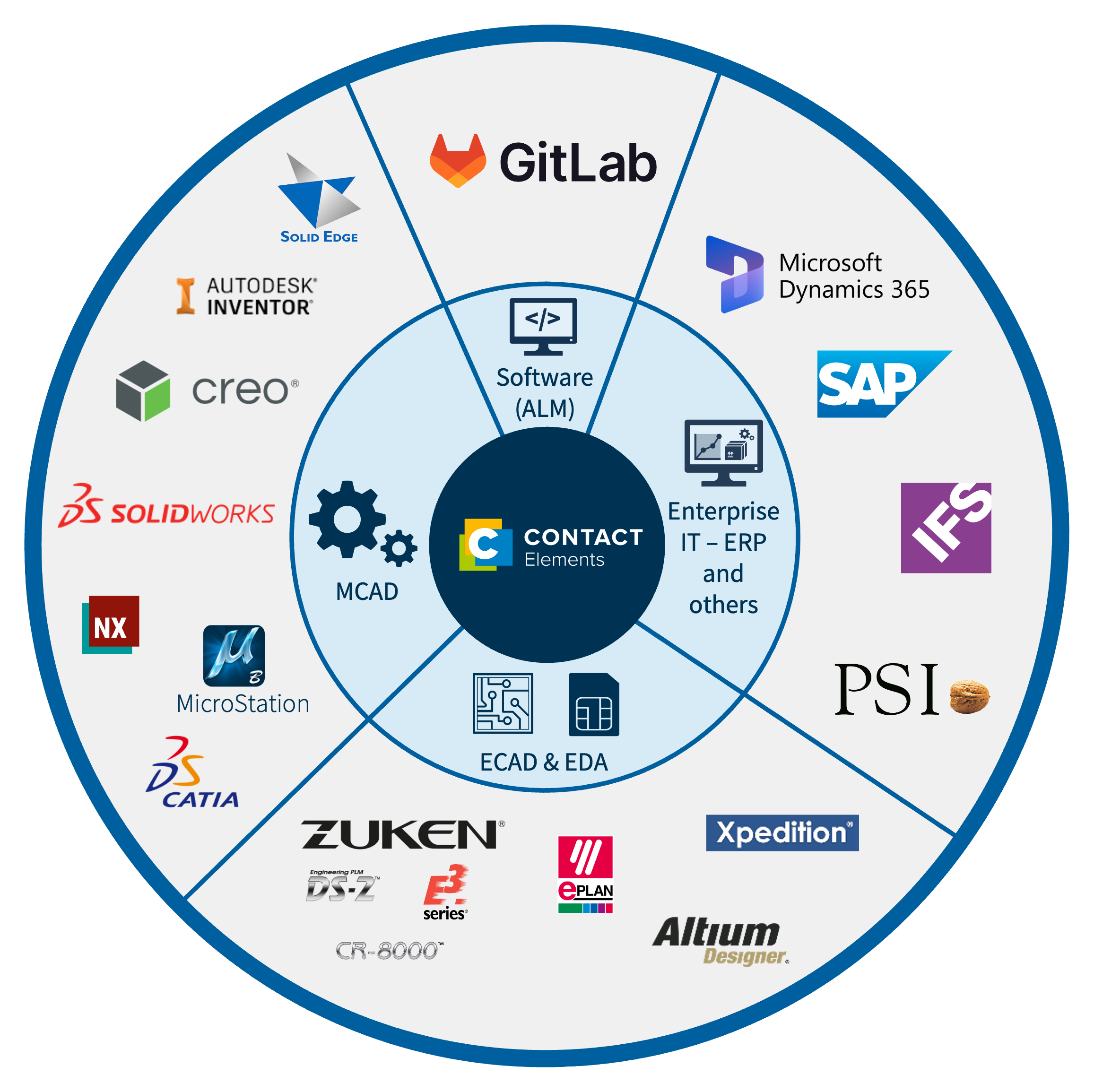
For the systems at the core of your IT landscape, there is no need for custom development: Certified interfaces connect CONTACT Elements with SAP, MCAD and ECAD tools, ALM solutions, Office applications, and IoT services. These interfaces are tested and maintained and remain functional when systems on either side are updated. This gives you a robust foundation from the start, allowing you to invest your time in optimizing processes rather than integration technology.
Certified interfaces to SAP and leading systems
For the systems at the core of your IT landscape, there is no need for custom development: Certified interfaces connect CONTACT Elements with SAP, MCAD and ECAD tools, ALM solutions, Office applications, and IoT services. These interfaces are tested and maintained and remain functional when systems on either side are updated. This gives you a robust foundation from the start, allowing you to invest your time in optimizing processes rather than integration technology.

For the systems at the core of your IT landscape, there is no need for custom development: Certified interfaces connect CONTACT Elements with SAP, MCAD and ECAD tools, ALM solutions, Office applications, and IoT services. These interfaces are tested and maintained and remain functional when systems on either side are updated. This gives you a robust foundation from the start, allowing you to invest your time in optimizing processes rather than integration technology.
How to ensure IT security

Defending against cyberattacks is only one aspect of IT security. In our White Paper, we show you six criteria that are important for designing your IT environment.
How to ensure IT security
Defending against cyberattacks is only one aspect of IT security. In our White Paper, we show you six criteria that are important for designing your IT environment.

Defending against cyberattacks is only one aspect of IT security. In our White Paper, we show you six criteria that are important for designing your IT environment.
Further information
Would you like to find out more about this topic? Choose one of the following information offers.

