



Maintenance
Proactively manage maintenance and sustainably increase equipment availability
Proactively prevent downtime instead of reacting to failures
In many companies, maintenance is still based on incomplete data and rigid service intervals – or action is only taken once equipment has failed. Valuable operational data remains unused, insights are tied to individual employees, and critical changes often go unnoticed until failures have occurred. This results in unnecessary downtime, unplanned service interventions, high spare parts costs, and time-consuming coordination between production and maintenance. At the same time, disconnected systems for machine data, maintenance planning, and documentation make it difficult to manage maintenance processes end-to-end. CONTACT Elements brings together operational data, AI-powered condition analysis, and standardized maintenance processes in an integrated Computerized Maintenance Management System (CMMS), providing the foundation for condition-based maintenance.
Benefits
- Prevent unplanned downtime and increase equipment availability
- Plan maintenance activities based on actual needs
- Ensure spare parts availability at an early stage
- Make AI-assisted maintenance decisions
- Support audits and simplify failure analysis with documented maintenance history

Automate condition-based maintenance

Instead of relying solely on calendar- or usage-based maintenance intervals, CONTACT Elements continuously analyzes operational and sensor data from production assets. AI algorithms detect critical changes and anomalies at an early stage, before they lead to unplanned downtime. Maintenance activities are scheduled based on actual equipment condition, enabling maintenance teams to plan services more efficiently. This reduces inspection effort while sustainably increasing equipment availability.
Automate condition-based maintenance
Instead of relying solely on calendar- or usage-based maintenance intervals, CONTACT Elements continuously analyzes operational and sensor data from production assets. AI algorithms detect critical changes and anomalies at an early stage, before they lead to unplanned downtime. Maintenance activities are scheduled based on actual equipment condition, enabling maintenance teams to plan services more efficiently. This reduces inspection effort while sustainably increasing equipment availability.
Instead of relying solely on calendar- or usage-based maintenance intervals, CONTACT Elements continuously analyzes operational and sensor data from production assets. AI algorithms detect critical changes and anomalies at an early stage, before they lead to unplanned downtime. Maintenance activities are scheduled based on actual equipment condition, enabling maintenance teams to plan services more efficiently. This reduces inspection effort while sustainably increasing equipment availability.
Automatically trigger maintenance orders
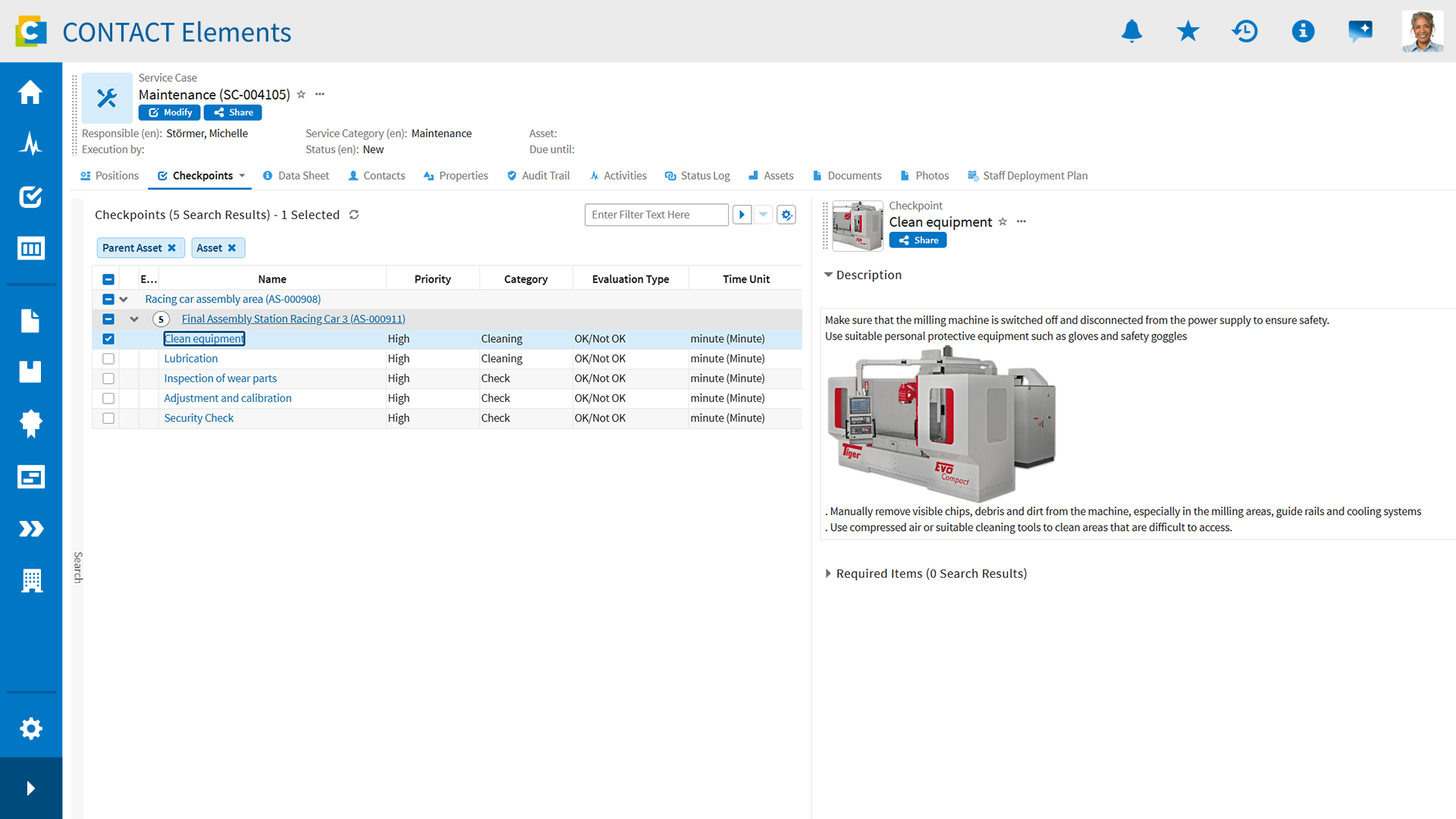
When CONTACT Elements detects a critical asset condition or the violation of defined thresholds, it automatically creates a maintenance order and provides all relevant information required for its execution. Responsibilities, priorities, and affected assets are assigned immediately. This shortens response times and allows maintenance activities to be coordinated at an early stage, before production disruptions occur.
Automatically trigger maintenance orders
When CONTACT Elements detects a critical asset condition or the violation of defined thresholds, it automatically creates a maintenance order and provides all relevant information required for its execution. Responsibilities, priorities, and affected assets are assigned immediately. This shortens response times and allows maintenance activities to be coordinated at an early stage, before production disruptions occur.
When CONTACT Elements detects a critical asset condition or the violation of defined thresholds, it automatically creates a maintenance order and provides all relevant information required for its execution. Responsibilities, priorities, and affected assets are assigned immediately. This shortens response times and allows maintenance activities to be coordinated at an early stage, before production disruptions occur.
Proactively plan spare parts supply

Detected maintenance needs are directly linked to spare parts supply. Required components can be reserved or ordered well in advance, ensuring they are available when the service is performed. This reduces waiting times for spare parts and prevents unnecessary downtime. At the same time, coordination between maintenance, warehousing, and procurement is improved.
Proactively plan spare parts supply
Detected maintenance needs are directly linked to spare parts supply. Required components can be reserved or ordered well in advance, ensuring they are available when the service is performed. This reduces waiting times for spare parts and prevents unnecessary downtime. At the same time, coordination between maintenance, warehousing, and procurement is improved.

Detected maintenance needs are directly linked to spare parts supply. Required components can be reserved or ordered well in advance, ensuring they are available when the service is performed. This reduces waiting times for spare parts and prevents unnecessary downtime. At the same time, coordination between maintenance, warehousing, and procurement is improved.
AI-supported maintenance decisions
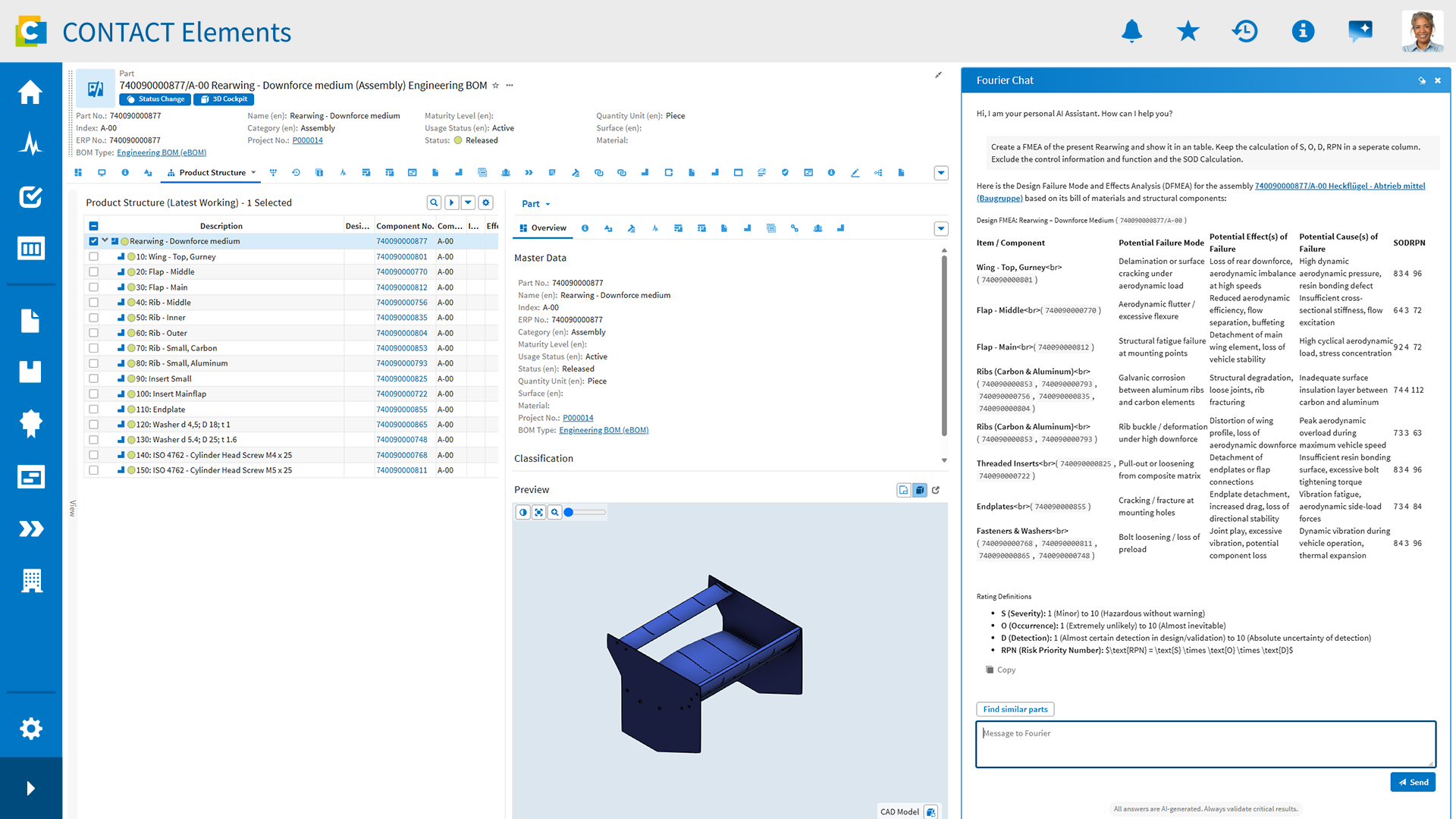
Fourier AI analyzes historical maintenance cases, operational data, and anomalies to provide service teams with context-aware recommendations. Recurring failure patterns are identified more quickly, and appropriate actions are suggested based on existing knowledge. This enables even less experienced employees to benefit from documented expertise and a solid foundation for decision-making.
AI-supported maintenance decisions
Fourier AI analyzes historical maintenance cases, operational data, and anomalies to provide service teams with context-aware recommendations. Recurring failure patterns are identified more quickly, and appropriate actions are suggested based on existing knowledge. This enables even less experienced employees to benefit from documented expertise and a solid foundation for decision-making.
Fourier AI analyzes historical maintenance cases, operational data, and anomalies to provide service teams with context-aware recommendations. Recurring failure patterns are identified more quickly, and appropriate actions are suggested based on existing knowledge. This enables even less experienced employees to benefit from documented expertise and a solid foundation for decision-making.
Document the complete maintenance history
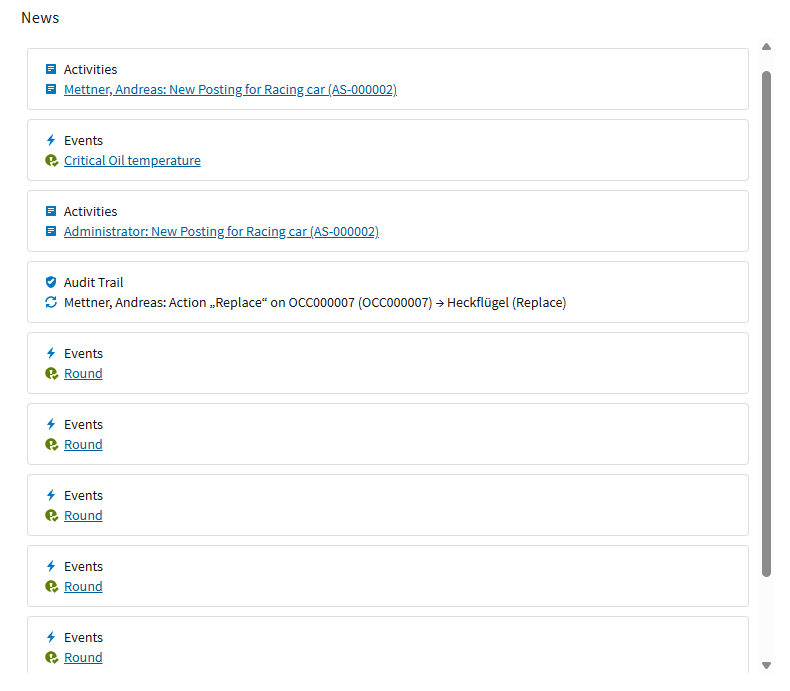
All maintenance activities, inspections, incidents, and service interventions are documented centrally and permanently linked to assets, components, and operational data. This creates a complete maintenance history that supports audits, simplifies root cause analysis, and enables continuous improvement. At the same time, all maintenance knowledge is available consistently and transparently across the organization.
Document the complete maintenance history
All maintenance activities, inspections, incidents, and service interventions are documented centrally and permanently linked to assets, components, and operational data. This creates a complete maintenance history that supports audits, simplifies root cause analysis, and enables continuous improvement. At the same time, all maintenance knowledge is available consistently and transparently across the organization.
All maintenance activities, inspections, incidents, and service interventions are documented centrally and permanently linked to assets, components, and operational data. This creates a complete maintenance history that supports audits, simplifies root cause analysis, and enables continuous improvement. At the same time, all maintenance knowledge is available consistently and transparently across the organization.
Further information
Would you like to find out more about this topic? Choose one of the following information offers.

