Master product architectures instead of developing variants from scratch

Companies are under pressure to deliver an increasing number of product variants in ever-shorter timeframes. Without a well-thought-out platform and module strategy, this leads to redundant development, inconsistent product structures, and rising engineering costs. Teams end up building similar solutions multiple times, while knowledge about reusable components remains siloed within individual projects or departments. At the same time, a lack of transparency and poorly documented dependencies make it difficult to evolve existing platforms. A systematically designed product architecture therefore forms the foundation for promoting reuse, reducing development effort, and managing product variants efficiently.

Read product information

Your benefits

  • Develop sustainable product platforms and modular product architectures
  • Link platforms with requirements, product structures, and engineering knowledge
  • Promote the reuse of proven components and avoid duplicate development efforts
  • Create transparency into dependencies between platforms, modules, and products
  • Support the standardized development of new product generations

Develop platform strategies

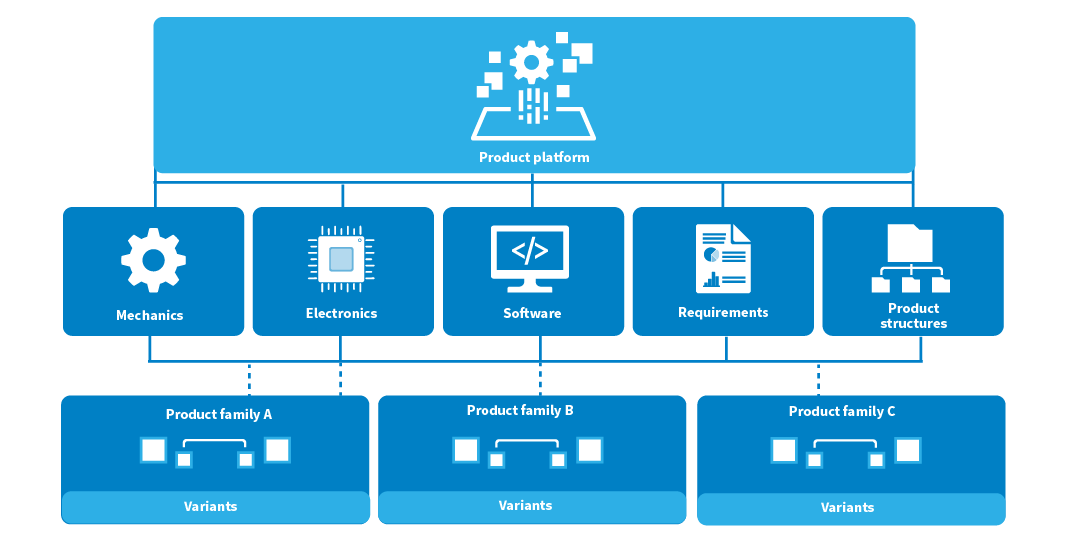
Product platforms often grow over the years driven by projects. This results in a lack of transparency about which modules are shared, which components are project-specific, and where potential for standardization may arise. CONTACT Elements maps platforms, modules, and their relationships within the PLM context and links them to requirements and product structures. This allows platform strategies to be systematically developed, documented, and continuously refined.

Develop platform strategies

Product platforms often grow over the years driven by projects. This results in a lack of transparency about which modules are shared, which components are project-specific, and where potential for standardization may arise. CONTACT Elements maps platforms, modules, and their relationships within the PLM context and links them to requirements and product structures. This allows platform strategies to be systematically developed, documented, and continuously refined.

Product platforms often grow over the years driven by projects. This results in a lack of transparency about which modules are shared, which components are project-specific, and where potential for standardization may arise. CONTACT Elements maps platforms, modules, and their relationships within the PLM context and links them to requirements and product structures. This allows platform strategies to be systematically developed, documented, and continuously refined.

Reuse modules

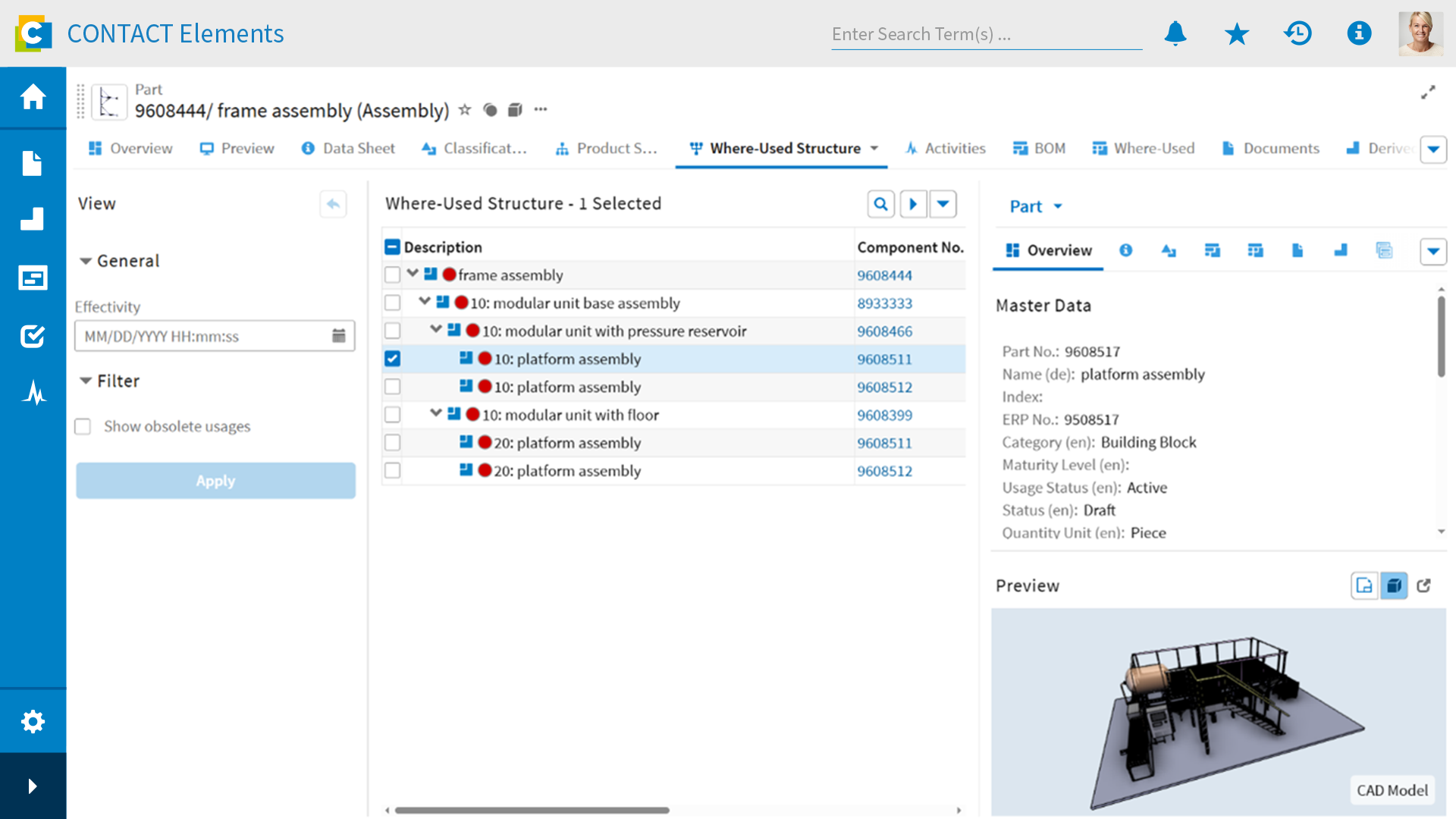
Proven assemblies and components are frequently redeveloped across different projects because their availability or suitability is not known. CONTACT Elements provides transparency regarding existing modules and their use across various products. Development teams identify reuse potential at an early stage, avoid duplicate developments, and leverage existing solutions for new product generations.

Reuse modules

Proven assemblies and components are frequently redeveloped across different projects because their availability or suitability is not known. CONTACT Elements provides transparency regarding existing modules and their use across various products. Development teams identify reuse potential at an early stage, avoid duplicate developments, and leverage existing solutions for new product generations.

Proven assemblies and components are frequently redeveloped across different projects because their availability or suitability is not known. CONTACT Elements provides transparency regarding existing modules and their use across various products. Development teams identify reuse potential at an early stage, avoid duplicate developments, and leverage existing solutions for new product generations.

Proactively drive standardization

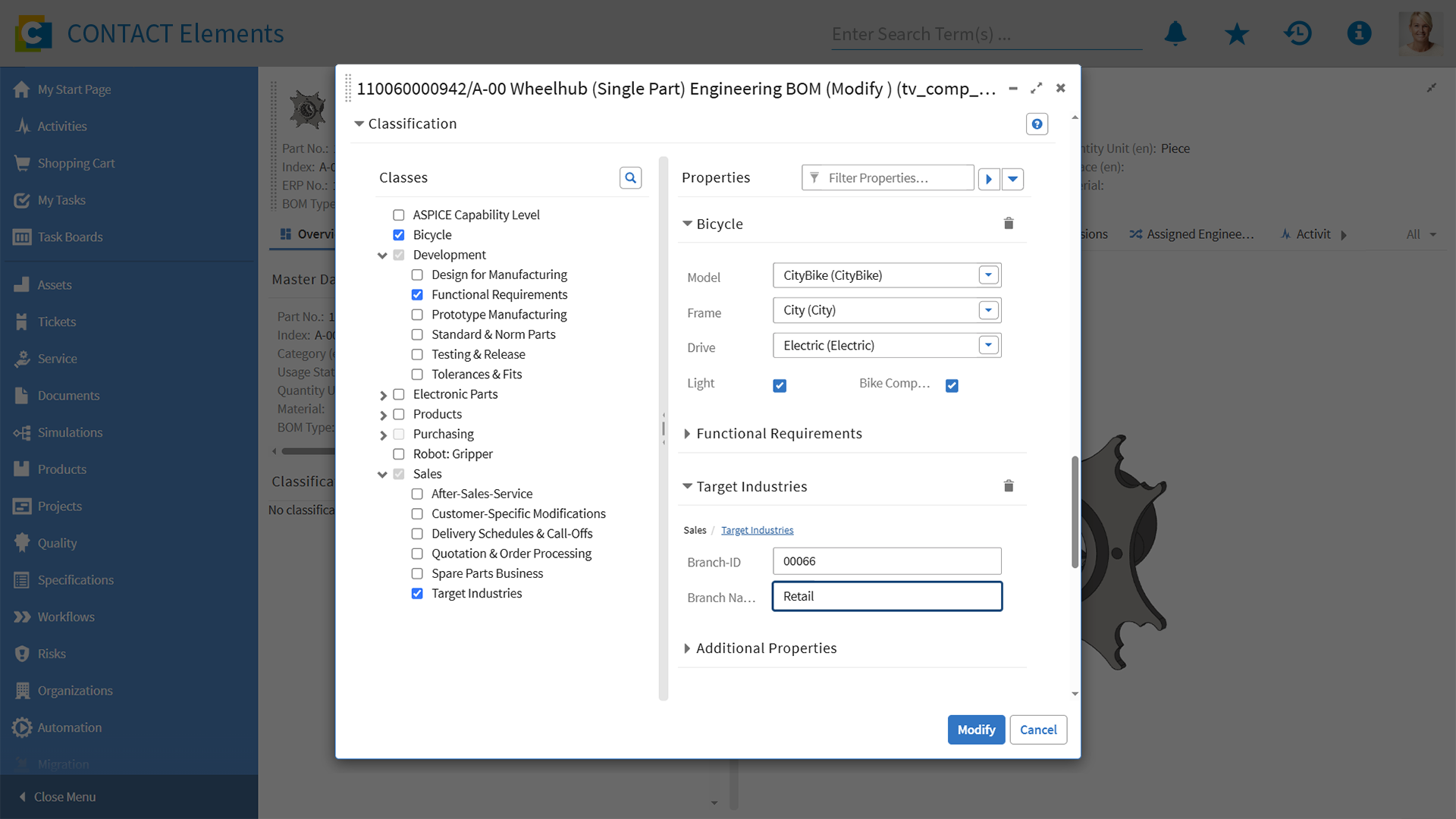
Many companies want to increase the share of standardized components, but lack sufficient transparency about which modules already exist or are being developed in parallel. CONTACT Elements supports the centralized management of modules and platforms and reveals standardization potential. By combining Universal Classification, Variants, and Materials, you gain transparency throughout your data inventory of variants, parts, and materials. Development teams can quickly find existing solutions and continuously increase the rate of reuse.

Proactively drive standardization

Many companies want to increase the share of standardized components, but lack sufficient transparency about which modules already exist or are being developed in parallel. CONTACT Elements supports the centralized management of modules and platforms and reveals standardization potential. By combining Universal Classification, Variants, and Materials, you gain transparency throughout your data inventory of variants, parts, and materials. Development teams can quickly find existing solutions and continuously increase the rate of reuse.

Many companies want to increase the share of standardized components, but lack sufficient transparency about which modules already exist or are being developed in parallel. CONTACT Elements supports the centralized management of modules and platforms and reveals standardization potential. By combining Universal Classification, Variants, and Materials, you gain transparency throughout your data inventory of variants, parts, and materials. Development teams can quickly find existing solutions and continuously increase the rate of reuse.

Further information

Would you like to find out more about this topic? Choose one of the following information offers.