



Innovations
Systematically unlock innovation potential and bring viable solutions to market faster.
Untapped product knowledge slows innovation
Many companies fail to leverage their innovation potential fully. While ideas spark across various departments, critical product knowledge, proven solutions, and existing constraints are often overlooked. As a result, opportunities are missed, decision-making is delayed, and course corrections happen too late. CONTACT Elements connects product data, experience, and requirements along the digital thread. This ensures that innovations are built on a solid foundation of information, leading to validated solutions much faster.
Your benefits
- Identify areas for innovation based on the existing product portfolio
- Reuse proven product knowledge for new developments
- Validate the feasibility of concepts with AI
- Consider requirements, constraints, and dependencies early on
- Identify conflicts and errors before they lead to additional effort

Target and prioritize ideas effectively

Product portfolios are constantly evolving. Without transparency into existing products, variants, and market requirements, it is difficult to set the right priorities for innovation. CONTACT Elements provides the necessary context from portfolio, product, and project data. This allows you to identify, evaluate, and prioritize opportunities based on strategic relevance. The result is a targeted innovation pipeline built on the actual state of your product portfolio.
Target and prioritize ideas effectively
Product portfolios are constantly evolving. Without transparency into existing products, variants, and market requirements, it is difficult to set the right priorities for innovation. CONTACT Elements provides the necessary context from portfolio, product, and project data. This allows you to identify, evaluate, and prioritize opportunities based on strategic relevance. The result is a targeted innovation pipeline built on the actual state of your product portfolio.

Product portfolios are constantly evolving. Without transparency into existing products, variants, and market requirements, it is difficult to set the right priorities for innovation. CONTACT Elements provides the necessary context from portfolio, product, and project data. This allows you to identify, evaluate, and prioritize opportunities based on strategic relevance. The result is a targeted innovation pipeline built on the actual state of your product portfolio.
Reuse existing knowledge
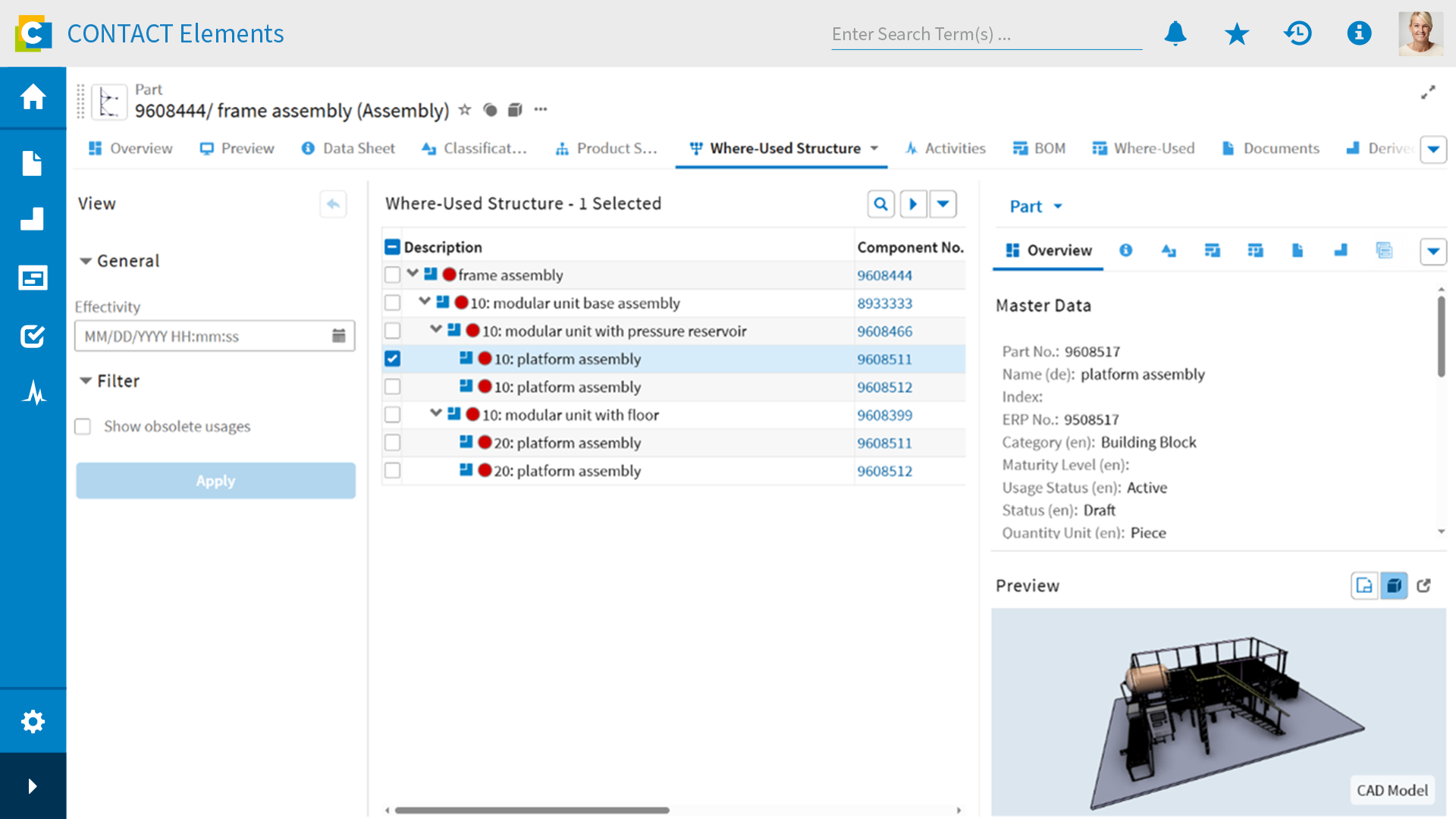
Lessons learned from previous projects are often lost or hard to find. CONTACT Elements makes product structures, specifications, CAD data, changes, and decisions accessible in context. Employees can find proven solutions faster, systematically reuse components, and easily trace decisions in similar contexts. This ensures new product ideas build directly on what has already proven successful.
Reuse existing knowledge
Lessons learned from previous projects are often lost or hard to find. CONTACT Elements makes product structures, specifications, CAD data, changes, and decisions accessible in context. Employees can find proven solutions faster, systematically reuse components, and easily trace decisions in similar contexts. This ensures new product ideas build directly on what has already proven successful.
Lessons learned from previous projects are often lost or hard to find. CONTACT Elements makes product structures, specifications, CAD data, changes, and decisions accessible in context. Employees can find proven solutions faster, systematically reuse components, and easily trace decisions in similar contexts. This ensures new product ideas build directly on what has already proven successful.
Use AI to validate concepts against constraints early on
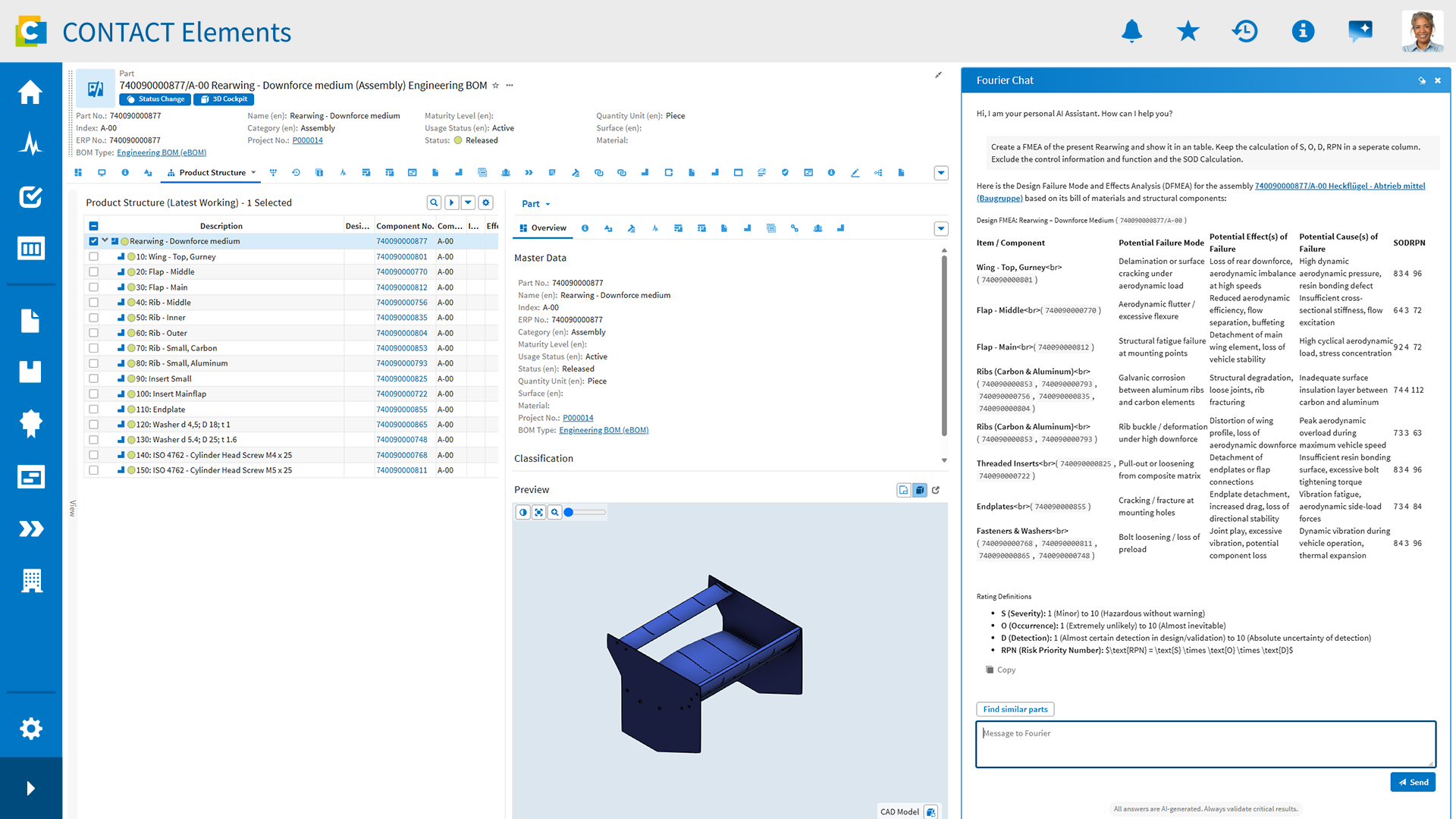
Promising ideas often fail because feasibility is evaluated too late. New concepts must meet a wide range of technical, regulatory, and organizational constraints. CONTACT Elements contains exactly this information in the form of manufacturing data, quality specifications, and change histories. With Fourier AI, you can launch an FMEA directly within the component context, leveraging relationships, documents, and existing engineering knowledge. Using agentic AI capabilities, you can validate concepts against quality guidelines and manufacturing constraints and automatically generate a verifiable FMEA structure. Crucially, you identify conflicts and potential errors before consuming valuable resources and driving up expenditure.
Use AI to validate concepts against constraints early on
Promising ideas often fail because feasibility is evaluated too late. New concepts must meet a wide range of technical, regulatory, and organizational constraints. CONTACT Elements contains exactly this information in the form of manufacturing data, quality specifications, and change histories. With Fourier AI, you can launch an FMEA directly within the component context, leveraging relationships, documents, and existing engineering knowledge. Using agentic AI capabilities, you can validate concepts against quality guidelines and manufacturing constraints and automatically generate a verifiable FMEA structure. Crucially, you identify conflicts and potential errors before consuming valuable resources and driving up expenditure.
Promising ideas often fail because feasibility is evaluated too late. New concepts must meet a wide range of technical, regulatory, and organizational constraints. CONTACT Elements contains exactly this information in the form of manufacturing data, quality specifications, and change histories. With Fourier AI, you can launch an FMEA directly within the component context, leveraging relationships, documents, and existing engineering knowledge. Using agentic AI capabilities, you can validate concepts against quality guidelines and manufacturing constraints and automatically generate a verifiable FMEA structure. Crucially, you identify conflicts and potential errors before consuming valuable resources and driving up expenditure.
Further information
Would you like to find out more about this topic? Choose one of the following information offers.

